India: Communist-led state Kerala ends extreme poverty
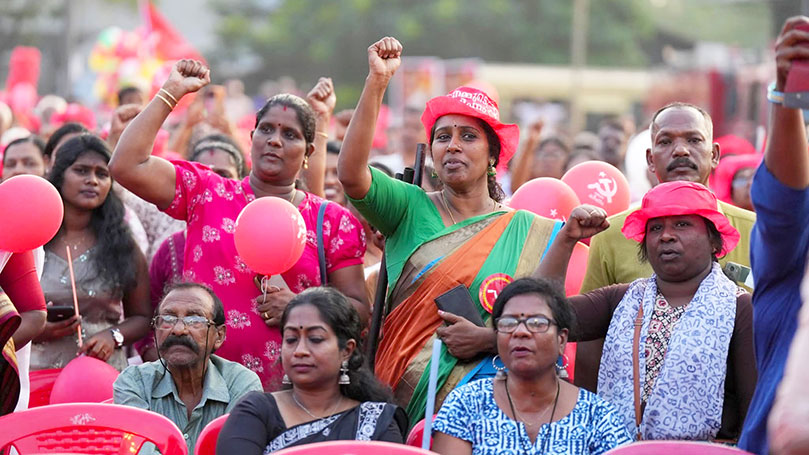
The Communist Party of India (Marxist)–led state of Kerala has become the first in India to eliminate extreme poverty.
The World Bank defines extreme poverty as living on less than $3 per day.
John Brittas, a member of India’s parliament representing the Communist Party of India (Marxist) said, “Kerala has etched a new chapter in history — erasing extreme poverty to become the first place in India and the second in the world to achieve this milestone.”
Mexico: Rubio–Sheinbaum meeting a victory for Mexican sovereignty
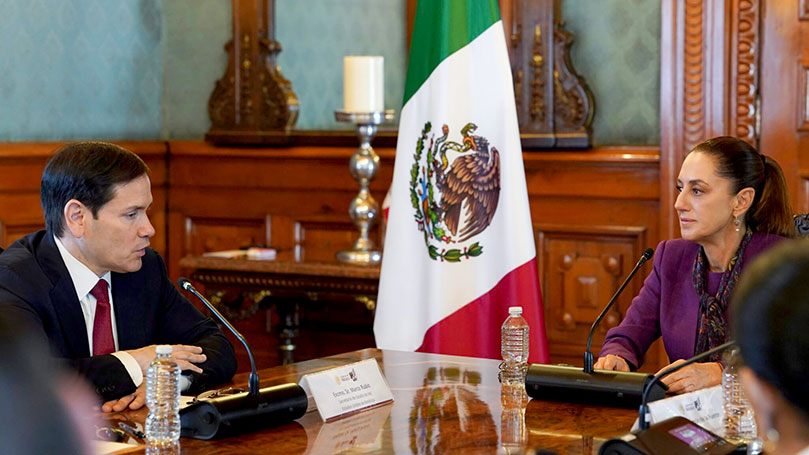
Marco Rubio, U.S. Secretary of State, and acting national security adviser, visited Mexico to meet with President Claudia Sheinbaum.
The Popular Socialist Party of Mexico supported the unyielding position of the Sheinbaum government and the meeting’s outcome, stating:
“The Yankee Secretary of State was forced to publicly acknowledge that Mexico is a sovereign country, that its authorities and those of the United States collaborate in addressing common problems; that each one attends only to matters in its own territory, without interfering in the others’; that they, the Yankees, bear responsibility for the illegal trafficking of weapons used by criminal gangs into our territory, and that the Mexican government acts with the utmost responsibility, complying with what it is required to do according to established international agreements.
“In summary, Marco Rubio’s meeting with the Mexican government was a great victory for all our people and their government … to the point of making it impossible for the fearsome adversary to carry out harmful actions against our country.
“For all the reasons stated, we unreservedly support President Claudia Sheinbaum in the defense of our independence and national sovereignty.”
France: Boulazac Isle Manoire celebrates 70 years of Communist governance
Boulazac Isle Manoire, a commune in the Southwest of France, since 1953, has had one Communist mayor after another. The first Communist mayor was Lucien Dutard, a former school teacher and a resistance fighter during WW2. Dutard also served in the National Assembly.
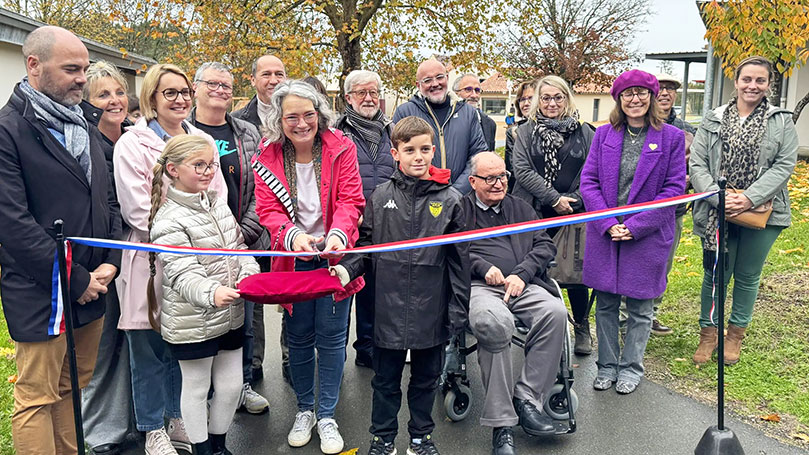
Since 2024, the Communist Party mayor is Fanny Castaignede, continuing the long tradition of Communists in office.
The Communist municipal government boasts a massive cultural center, the National Circus Center, equipped with a range of facilities dedicated to circus arts, as well as a 12,000 square foot media library. The municipal government provides children aged 6 and up with a Culture Pass, allowing every child and teenager to have access to the municipal services, regardless of income. The government also has a similar program for athletics, where a municipal sports pass allows youths to access the gymnasiums, soccer and tennis courts, the fencing halls, and outdoor spaces free of charge.
Seniors are not left behind, either. Two municipal employees maintain daily contact with those senior citizens who are without families. And since early 2025, the government has created a municipal health insurance plan, allowing everyone, especially retirees, to access quality health coverage.
Boulazac Isle Manoire is a microcosm of what a socialist society might be and a shining example of Communist government in action.
“For 70 years, faced with liberalism which weakens social bonds and fuels fear and rejection, we have remained faithful to this demanding objective: to make the community a place of emancipation, social justice, and shared progress,” according to Fanny Castaignede, mayor of Boulazac-Isle-Manoire and regional Councillor for Nouvelle-Aquitaine.
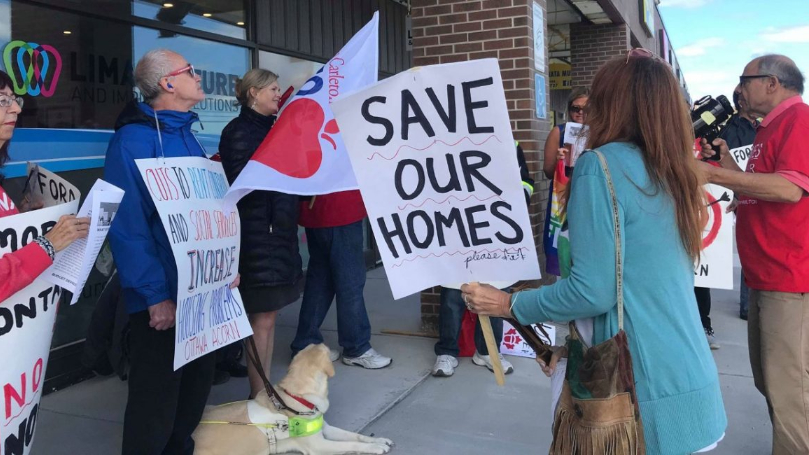
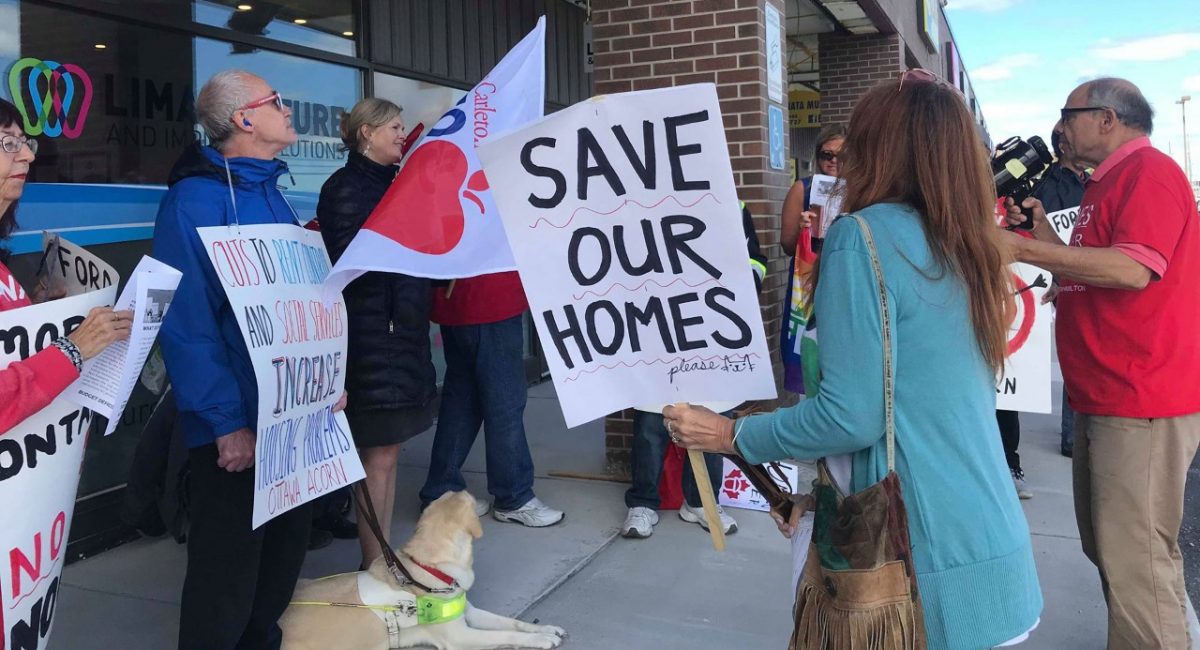
Canada: Communists continue “rollback” campaign
Prime Minister Mark Carney’s first budget has raised military spending to the U.S. and NATO’s demand of 5% of GDP. The result has been 40,000 job cuts and the loss of services in every public sector.
To combat the rise of militarism and the attack on workers, the Communist Party of Canada — the only political party to oppose the budget — has put forward its “rollback” campaign. Since March of 2025, the party has been organizing public meetings across the country mobilizing workers against the austerity budget.
The party’s Central Executive Committee issued a statement, saying, “This is a war budget, a corporate budget and an austerity budget that needs to be rolled back by a broad based people’s coalition of the labour and democratic movements across the country.”
Cuba: Slowly recovering from Hurricane Melissa
Hurricane Melissa has hit the socialist island nation of Cuba, causing at least 67 deaths and many more injuries.
President Miguel Díaz-Canel, also First Secretary of the Communist Party of Cuba, inspected the damage caused by Melissa in eastern Cuba, including the hardest-hit areas, such as Santiago de Cuba, where communities were subject to flooding, damage to homes, infrastructure, and hospitals. Nearly a million people had been evacuated.
Reconstruction efforts are underway and two weeks later, seven municipalities have recovered electric service, while in San Juan Martinez and San Luis the energy supply remains at 66%. President Díaz-Canel promised that “Restoring electricity and communications is a priority.”
Venezuela: Struggling against dramatically escalated tensions with the United States
The Trump regime, in a bid to distract the U.S. people from a collapsing economy and the political embarrassment from the Epstein files, has dramatically escalated tensions with Venezuela. The administration has been murdering suspected so-called “narco-terrorists” without the slightest bit of proof, and moving thousands of troops, nuclear powered aircraft carriers, and numerous other weapons assets, off the coast.
The Communist Party of Venezuela (CPV), the nation’s oldest political party, opposes U.S. interference but also has criticism’s of Maduro’s policies, noting a drop in the minimum wage to less than a dollar, attacks on unions, and compromises with foreign oil companies.
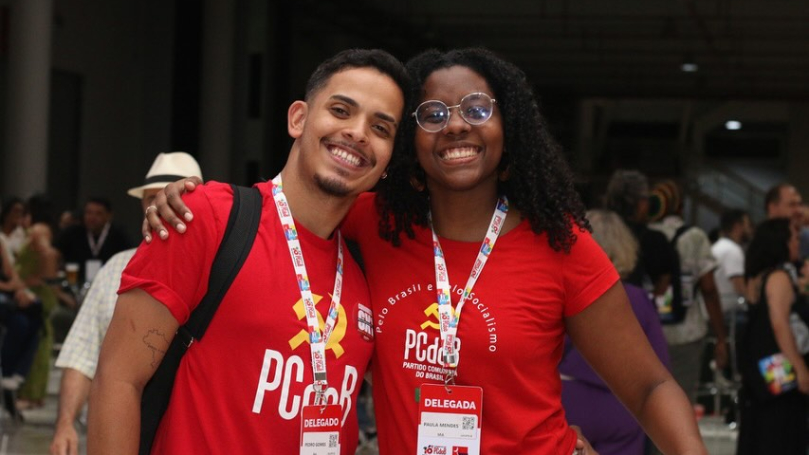
Brazil: 16th National Congress of the Communist Party of Brazil
At the 16th National Congress of the Communist Party of Brazil (PCdoB), a new Central Committee was elected which comprised an equal share of men and women, as well as indigenous people.
Luciana Santos, Minister of Science, Technology and Innovation in the national government, was re-elected president of the party.
The party’s Congress was joined by President Lula, government officials, and leaders of mass organizations, showcasing what Santos calls “a sign of the respect and admiration earned by the party.”
Key tasks of the 16th Congress included preparing for future elections in 2026, strengthening the bond between the party and the working class and youth movements, and offering a new program for the defense of democracy, national development, and sovereignty.
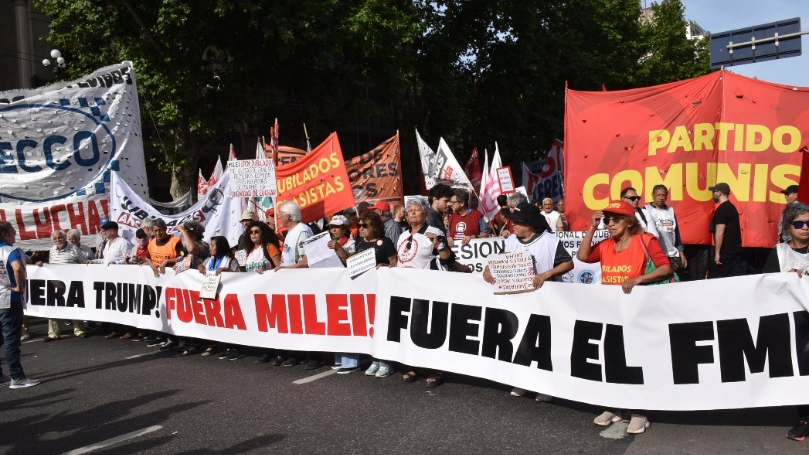
Argentina: Communist Party celebrates ousting of narco-capitalist congressman
In Buenos Aires, José Luis Espert — former National Deputy and ally to the far right President Javier Milei — has been forced to resign in disgrace. Reports and court documents from Texas showed he received more than $200,000 from a trust associated with a U.S.-based businessman who was charged with drug trafficking and money laundering.
Espert’s replacement, Diego Santilli, is a beneficiary of offshore companies in tax havens. As Secretary of Security, he repressed teachers, nurses, and other workers.
The Communist Party of Argentina endorsed the candidates of Fuerza Patria, or Homeland Force, the main center-left opposition force in the country’s most recent elections. The party called for a program that raises the defense of sovereignty, the disregard of the foreign debt, the expansion of labor rights, the development of national industry and workers’ management, and that imposes progressive taxes on large companies to expand and improve public education and health. As well as the participation of workers in the profits of private companies, they call for the reduction of the working day without salary reduction, the re-nationalization of the Port of Quequén and the Atucha Nuclear Power Plant and the Paraná-Paraguay Trunk Waterway, among others.
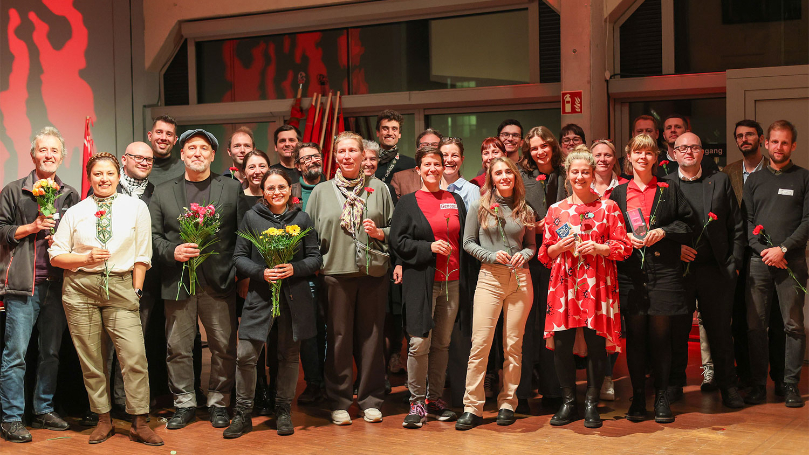
Austria: Communist Party of Austria concludes 39th Congress
Late in October, the Communist Party of Austria, the KPÖ , concluded its 39th party congress and elected a new Executive Committee.
The KPÖ has been on a winning streak. Since the last congress, the KPÖ has won the election for mayor in Graz as well as the position of deputy mayors in Salzburg. It has been able to move into all Viennese district councils and into the Salzburg State Parliament. It entered the Innsbruck Municipal Council for the first time in decades, became a parliamentary group in the Linz Municipal Council, and joined the municipal councils of many other municipalities for the first time.
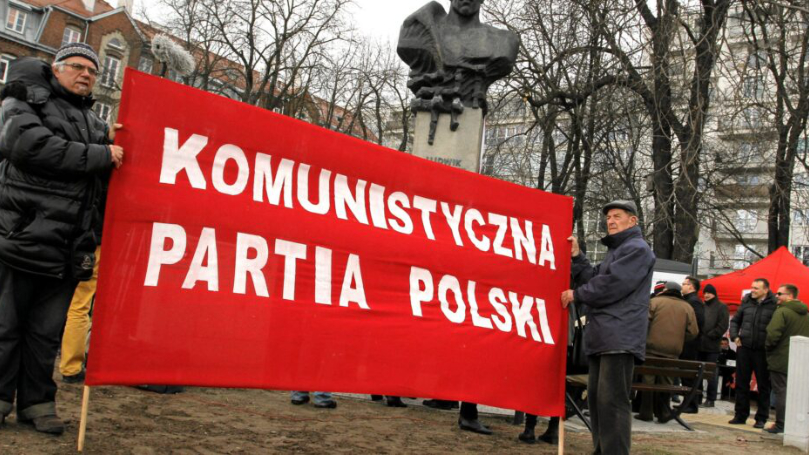
Poland: Communist Party fights ban
Poland’s Constitutional Tribunal has ruled to outlaw the Communist Party. The CPUSA condemned the ruling stating in part: “The Communist Party USA condemns the anti-communist ruling by Poland’s Constitutional Tribunal to outlaw the Communist Party of Poland (KPP). This decision, instigated by the ultra-right President Karol Nawrocki, is a blatant political attack on democratic rights. It criminalizes an entire school of political thought and a legitimate vehicle for working-class representation under the hollow pretext of defending “constitutional order.”
South Africa: SACP launches Red October
The South African Communist Party (SACP) and the National Union of Mineworkers marched to the Labor department in Bellville, in Western Cape, to protest the over 30% unemployment rate and the subcontracting practices of South Africa’s Energy Service Company.
The month of October, dubbed Red October, saw numerous Communist and workers’ protests, such as the march on the provincial government building to highlight plague of crime rocking the country.
“This is our Red October march,” the SACP provincial secretary Benson Ngqentsu told reporters.
In South Africa, October is known as Red October, where every year, the SACP mobilizes its members in rallies, marches, and strikes.
This year, the SACP has pledged to contest the 2026 elections outside of its tripartite alliance with the ANC, citing the unemployment, poverty, and violence in the country.
China: The east is red and green
The Chinese 15th Five-Year Plan (2026-30) is a blueprint for modernization, pivoting from manufacturing to innovation-driven development, pioneering what President Xi Jinping has called “new productive forces.” This refers to the development of advanced technology such as AI, high tech chips, batteries, electric cars, and green energy.
By the start of the 15th Five-Year Plan and the start of the 16th, in 2035, China will aim to reduce economy-wide net greenhouse gas emissions by 7% to 10%.
Already this year, non-fossil-fuel energy accounted for more than 60% of China’s total power generation capacity. China’s supply chain and ability to produce over 80% of the world’s solar panels, 60% of wind turbines, and 75% of electric vehicles has dramatically lowered the cost of these technologies.
Images: People at the LDF convention celebrate “an unprecedented leap of development in Kerala” by CPIM Kerala (Facebook); Mexican President Claudia Sheinbaum meets with U.S. Secretary of State Marco Rubio, photo by Claudia Sheinbaum on (X via People’s Dispatch); New Mayor of Boulazac Isle Manoire Fanny Castaignede cuts the ribbon for the new courtyard of the Alice Milliat school in Boulazac-Isle-Manoire (grandperigueux.fr); Ottawa Save Our Homes protest by Cara Powell (Creative Commons); Delegates to the 16th National Congress of the Communist Party of Brazil by Partido Communista do Brasil (Facebook); Sovereignty and dignity are defended in the streets by Partido Comunista de la Argentina (X); Andrea Hornung spricht auf der Friedensdemonstration am 3. Oktober 2025 in Berlin. by SDAJ on UZ.blog; The newly elected Federal Executive Board – 39. Party Congress of the KPÖ by KPOE;
Author

-
The Communist Party USA is a revolutionary working-class political party founded in 1919 in Chicago, IL.
The Communist Party stands for the interests of the American working class and the American people. It stands for our interests in both the present and the future. Solidarity with workers of other countries is also part of our work. We work in coalition with the labor movement, the peace movement, the student movement, organizations fighting for equality and social justice, the environmental movement, immigrants rights groups and the health care for all campaign.
But to win a better life for working families, we believe that we must go further. We believe that the American people can replace capitalism with a system that puts people before profit — socialism.
We are rooted in our country's revolutionary history and its struggles for democracy. We call for "Bill of Rights" socialism, guaranteeing full individual freedoms.
 Join Now