

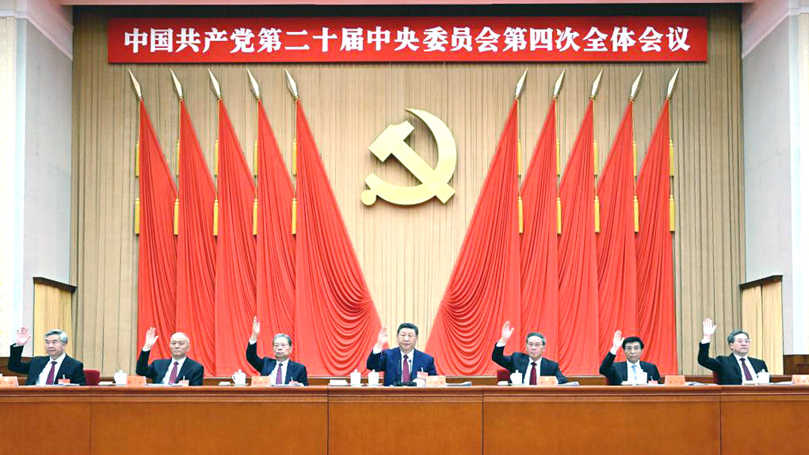
And you thought that five-year plans had passed into the mists of history! Back in the days of the Soviet Union, we heard much about “five-year plans.” But with the passing of the USSR and the Eastern European socialist states, one could easily assume that the idea of five-year plans went with them. Not true!
Five-year plans are alive and well in the People’s Republic of China, as well as the other socialist countries today. This article will discuss their role and history during the People’s Republic, as well as detail the achievements of the recently completed Fourteenth Five-Year Plan (2021-25) and the plans and expectations for the Fifteenth (2026-30).
The place of the five-year plans in Chinese society
President of China Xi Jinping has stated that the development and carrying out of the plans stand as an important piece of experience in the CPC’s approach to governing the country. China’s system is distinct from those of other countries: “On the basis of research and fact-finding activities, we propose a comprehensive and systematic plan that fully respects the will of the people and conforms to reality… and we have superb execution capabilities to implement these plans.”
In the words of Chinese analysts, “The scientific formulation and continuous implementation of the five-year plans have always been a key part of China’s governance system and demonstrate the significant political strength of socialism with Chinese characteristics.” They have been called a “key part of China’s governance system.”
Unlike the unpredictability of capitalist economic policies, one expert focuses on the fact that China has “consistent plans [that] reflect the CPC’s and the Chinese people’s unwavering focus on long-term goals.” That idea is reinforced by Yan Yilong, a leading scholar, who said, “Research indicates a high accomplishment rate for the goals set in these plans, demonstrating that strategic visions have been turned into real outcomes.”
Far from the system used in the USSR, China does not set goals as to the number of widgets or gizmos to be produced over a five-year span. China’s plans are the “most authoritative policy blueprints, outlining strategic goals for economic and social development over five-year periods.” Among their achievements have been what one Chinese expert called “the two miracles of rapid economic growth and long-term social stability.”
At the present time, China has eliminated absolute poverty while “China aims to basically realize socialist modernization by 2035 and build itself into a great modern socialist country in all respects by the middle of this century.”
The history of the Five-Year plans
China has formulated fourteen five-year plans since 1953. Over the course of time, each has reflected the needs of its moment. At first, the aim was to transform a country that was called a “poor agricultural backwater” into a “global economic powerhouse.” The idea was “to compress centuries of Western economic development into decades.”
After the Revolution, poverty was widespread and industry barely existed. To overcome these conditions, the Communist Party of China turned for guidance to the only country with experience running five-year plans — the Soviet Union. One of the first achievements was the production of the country’s first automobiles: twelve trucks under the brand name “Jiefang,” which means “liberation” in Chinese. They were delivered to the USSR.
The early plans centered on economic growth; their primary focus was industrialization. Following the Soviet model, their goals were highly centralized and centered on state-owned enterprises (SOEs). At the same time, people’s lives improved. Life expectancy rose from 40 in 1950 to 65 in 1980. Per capita income increased by over four times in the same period.
In 1978, under the leadership of Deng Xiaoping, the country undertook a program of “opening up” and “modernization.” The five-year plans reflected these changes. In addition to economic goals, there was equal emphasis on social development. Areas such as science and technology, education, culture, and healthcare were incorporated into the national goals. No longer did the government micromanage industrial output.
By the twenty-first century, emphasis shifted. Environmental problems such as air pollution and the need for clean water were made priorities. China began its transition to a green economy. By the 2020s, the government had pulled hundreds of millions out of extreme poverty and “fully built a moderately prosperous society.” What had started as an economic roadmap now is a “vision of nation building.”
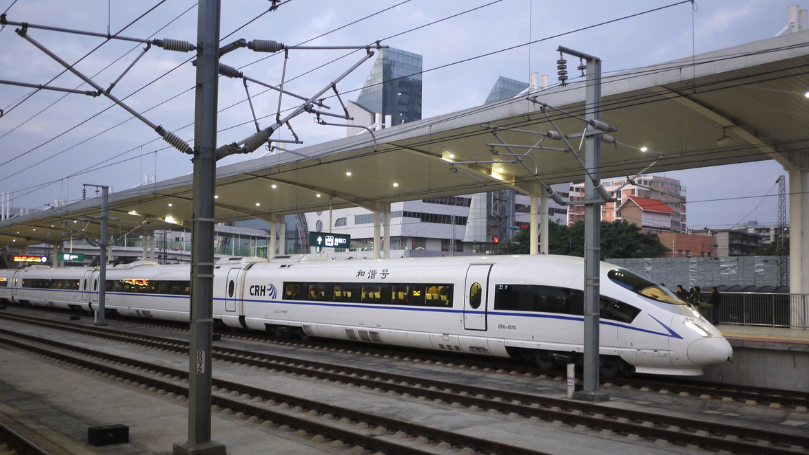
The fourteenth Five-Year Plan, 2021-2025
In January 2021, China commenced its Fourteenth Five-Year Plan, which concluded at the end of December 2025. In the words of the CPC leadership, the country “effectively navigated various shocks and challenges, and saw significant enhancement of its hard power in areas including economy, science and technology, and national defense.”
And in that time, it contributed around thirty percent of worldwide global economic expansion while maintaining a 5.5 percent annual growth rate. According to Zheng Shanjie, head of the National Development and Reform Commission (NDRC), between 2021 and 2025, China became “the most stable, reliable, and dynamic force in global development.” In the words of one authority, China’s “exports of affordable, high-quality goods help secure global price stability and improve welfare worldwide.”
There was growth in the transition to a green economy, an uptick in the pace of innovation, a marked increase in the digital economy, and an expansion of high-end manufacturing, all while the well-being of the people continued to improve. Domestic consumption increased, achieving 86.4 percent of GDP increases.
In the words of Lu Zhiyuan, Minister of Civil Affairs, over the past five years, “China has built a tiered and targeted social assistance system and launched a national dynamic monitoring mechanism to identify and support people in financial straits.”
When looking at the growth of renewable energy, China has become a global leader in the transition to a green economy. During the 14th Five-Year Plan, it more than doubled the number of kilowatts installed, which meant that by 2025 one-third of the kilowatts generated come from green sources. At the same time, China has continued its opening up. By 2025, “foreign-invested enterprises now account for one-third of China’s imports and exports, one-quarter of its industrial output, and one-seventh of its tax revenue, while creating more than 30 million jobs.” China’s total computing power now ranks second globally.
The development of the fifteenth Five-Year Plan
The process for creating the new plan started about two years before it went into effect. Led by the CPC Central Committee, each planning cycle is like a well-tuned engine with many moving parts. As one group of party leaders remarked, “We should gather wide-ranging input through forums and discussions, field studies, solicitation of opinions, and other means. Using such activities, we will pinpoint problems, draw on fresh experiences, make our plans more targeted and practical, and build consensus. Furthermore, the implementation process should be promptly refined in line with the comments of all parties involved.”
The document was built through extensive consultation and democratic deliberation. Today, it was inspired in large part by the input from Xi Jinping. His “methodology fuses the central leadership with a vast, institutionalized process of mass consultation — a principle he champions as unifying top-level design with ‘asking the people for advice.’ This is a core tenet of what the Party calls whole-process people’s democracy.”
It was also stressed by the Central Committee that “law-based governance in all respects is of great significance for developing a more sound system of socialist rule of law with Chinese characteristics and for building a socialist country under the rule of law at a higher stage.”
President Xi noted that in planning economic and social development for the next five years, targets and tasks should be set in a reasonable manner with approaches and measures to be proposed for each specific field. For the Fifteenth Five-Year Plan, a dedicated online portal was set up for a month, designed for the public to give suggestions. More than 3.1 million ideas were submitted in subjects as diverse as technological innovation and social welfare. Then, the CPC Central Committee began to seek input from government departments, local officials, as well as experts in many fields and scholars. The drafting process also included input from the private sector.
There was a symposium held in September 2025 in which “private enterprises [were] invited to submit their opinions and suggestions on expanding effective investment during the 15th Five-Year Plan period… participating enterprises expressed their willingness to actively take part in the construction of major national projects. They also plan to focus on new technologies, new industries, new business formats, and new models to expand effective investment as a way to help better support high-quality economic and social development.” The Plan will be formally adopted by the National People’s Congress in March.
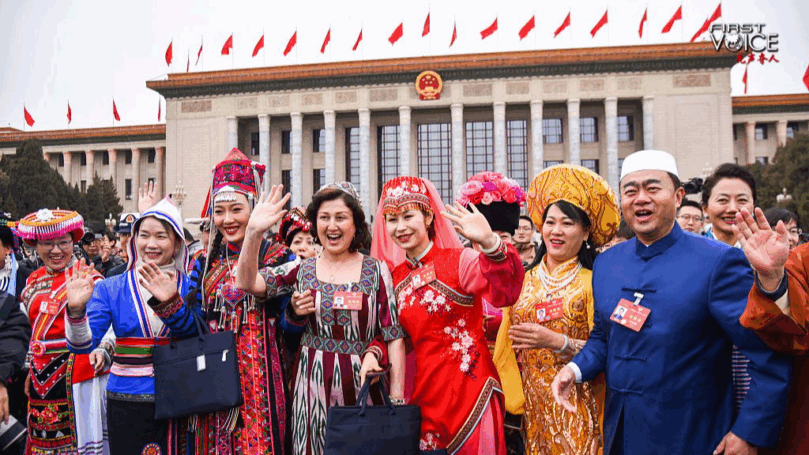
China’s economic and social plan for the next half-decade
The next five years, 2026-30, are part of an overarching goal developed by the 20th National Congress of the CPC, which sees the 14th, 15th, and 16th Five-Year Plans as a “crucial step” in realizing “socialist modernization” by 2035. Main areas of work in the 15th Five-Year Plan will include upholding the Party’s overall leadership, putting the people first, pursuing high-quality development, comprehensively deepening reform, promoting interplay between an efficient market and a well-functioning government, and ensuring both development and security. The plan focuses on prioritizing people’s livelihoods, in which practical measures should be taken to benefit the people. At the same time, bottom-line thinking must be maintained to actively and prudently defuse risks in key areas.
Additional priorities include bolstering technological innovation and scientific research, as well as expanding domestic demand. New types of infrastructure will be built with appropriate forward planning, as will information and communication networks. The plan also calls for setting key carbon emissions targets and realigning the decarbonization strategy alongside rural revitalization. This includes “more targeted measures [which] should be rolled out to improve the social safety net for people of low-income groups, the majority of whom live in rural areas.”
Finally, the plan aims to raise the average life expectancy of the people to around 80 and ensures the economy expands at an “appropriate growth rate” to meet the 2035 goal of having a per capita GDP of a “mid-level developed country.”
Yet, more than just its centering on domestic issues, the 15th Five-Year Plan also connects China to the wider world. China takes a “long-term” view in dealing with international issues. It provides “greater continuity and predictability into global politics,” upholds genuine multilateralism, and “promote[s] a global governance system that better represents the interests of the majority of nations and embodies fairness and justice, and provide[s] a governance model that balances efficiency and equity with a long-term perspective — making global governance more transparent, efficient, stable and enduring.”
This stability and reliability extend to the economic sphere with its policy of “opening up,” as well as its trade policies and the quality of its products. The Party’s goal to be reached by the centennial of the People’s Republic is “building China into a great modern socialist country in all respects by mid-century.”
Overall evaluation of the Five-Year Plans
The five-year plans have been described as an “overarching blueprint” that has guided national development. China has developed an extensive manufacturing system as described by the National Development and Reform Commission (NDRC) that includes 41 major industrial categories, with many subcategories. What started in the First Five-Year Plan with the production of twelve trucks has now reached a point where the Chinese electric vehicle manufacturer BYD at its plant in Shenzhen, Guangdong Province, is capable of producing a new car every minute.
At the same time, China’s five-year plans have “greatly improved its social welfare support, focusing on stabilizing employment and increasing income,” according to Lu Yan.
Wang Huiyao, President of the Center for China and Globalization, a Beijing-based think tank, adds that they provide “the global economy with unparalleled certainty — a critical anchor at a time when the world faces profound unpredictability.”
In a period of a little more than seventy years, China has taken the concept of the five-year plan initiated by the Soviet Union and adapted it to socialism with Chinese characteristics. What was a very poor country in the early years of the socialist revolution has become a major world economic power, raised the living standard of the people many times, and become a force for world economic stability and innovation. The future, as a result of China’s growth and development, promises a better world, not just for themselves, but for all humanity.
The opinions of the author do not necessarily reflect the positions of the CPUSA.
Images: The 20th Central Committee of the CPC convened its fourth plenary session in Beijing from Monday to Thursday. Xinhua/Shen Hong; China Railways CRH3 Train. Creative Commons/Flickr; Attendees of the second session of the 14th National Committee of the Chinese People’s Political Consultative Conference. Creative Commons/CGTN.

 Join Now