

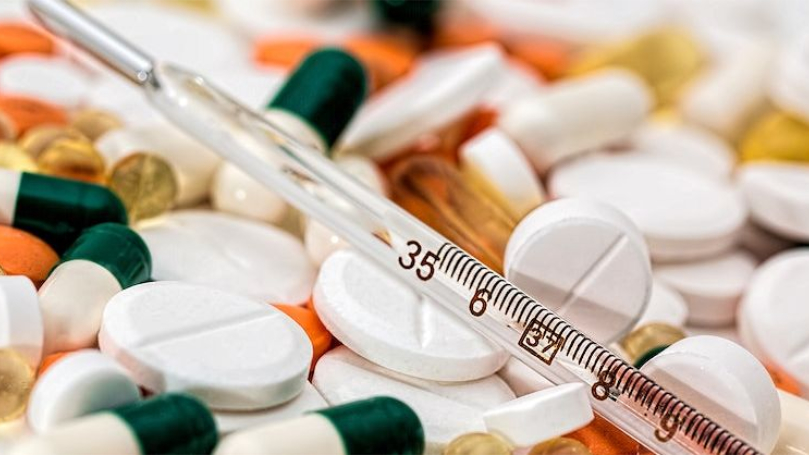
How Pharmacy Benefit Managers became one of capital’s most perfect instruments — and what we can do about it.
In Beattyville, Kentucky, a map hangs on a pharmacy wall, serving as a visual record of our healthcare crisis. The Kentucky Independent Pharmacy Alliance uses it to track every independent pharmacy that has closed across Kentucky’s 120 counties. County by county, dots accumulate, marking the loss of essential local institutions. In 2023 alone, 67 independent pharmacies shut their doors, many in rural and low-income areas. Since that count began, more than 100 have vanished, defeated by a system engineered to drain them dry.
For many people, especially in rural areas, the local pharmacy is part of the healthcare safety net. Here patients pick up prescriptions, learn how to safely take their medications, and get vaccinations or other basic services. Pharmacies are often the most accessible point of care: a lot closer than a clinic and run by someone who knows your name. When that pharmacy disappears, the consequences are longer drives, delayed treatment, and in some cases, going without medication altogether. These are not abstract policy outcomes. These are the conditions under which people get sicker, end up in emergency rooms, and die earlier than they should. And there is a specific, identifiable, structural reason this is happening, and it has a name: Pharmacy Benefit Managers (PBMs).
What is a PBM, and why should you care
The engine behind this collapse is a group of middlemen known as Pharmacy Benefit Managers (PBMs). While they are theoretically tasked with negotiating lower drug prices and processing claims, they function as parasitic entities that produce and dispense nothing, yet control the entire transaction. By inserting themselves between manufacturers, insurers, pharmacies, and patients, they extract profit from every direction.
The three biggest PBMs — CVS Caremark, Express Scripts, and OptumRx — process nearly 80 percent of all U.S. prescriptions. But the deeper problem is who owns them. These are not neutral arbiters; they are vertical monopolies. CVS Caremark is a subsidiary of CVS Health, one of the largest pharmacy chains in the country. OptumRx belongs to UnitedHealth Group, which also sells the insurance plans those prescriptions run through. In other words, the entity setting your local pharmacy’s reimbursement rates has a direct financial interest in seeing that pharmacy fail.
That power is routinely used in ways that drive independent pharmacies out of existence. PBMs can set reimbursement rates below what a pharmacy actually paid to stock the drug, meaning your local pharmacy loses money on every prescription it fills, with no ability to negotiate and no way out of the contract. On top of that, PBMs can reach back months after a prescription has already been filled and claw back a portion of the payment they already made. And because the biggest PBMs own their own pharmacy chains, they have every incentive to steer patients toward those chains, while continuing to underpay the independent competitors they are slowly starving out.
Who gets hurt? The geography of pharmacy deserts
While residents in affluent suburban areas may readily access alternative pharmacies within a short distance, closures in locations such as Calhoun or Midway, KY can leave communities without any local pharmacy. Residents could find themselves 40 to 50 miles from the nearest pharmacy. For workers without reliable transportation or for disabled folks, that distance is not an inconvenience. It is a barrier that translates directly into missed doses, untreated conditions, and preventable hospitalizations.
This is not random. The geography of pharmacy closures in Kentucky maps almost perfectly onto the geography of poverty, of deindustrialization, of communities that have already been hollowed out by decades of capital flight. Eastern Kentucky — coal country, the communities that built the energy wealth of this country and were left with black lung and poverty in return — is losing its pharmacies at a rate that should alarm everyone. Between 2013 and 2022, about ten percent of independent retail pharmacies in rural America closed. In Kentucky, the pace has accelerated dramatically since then.
What is being lost is not just a dispensing location. Independent pharmacies do things that chain pharmacies and mail-order services do not. They know their patients. They notice when a patient seems confused or asks an unusual question. They do blister packaging for patients who struggle with complex regimens. Many provide free delivery, a service that costs the pharmacies significant time and money. They serve Medicaid populations that chain pharmacies often deprioritize. When the pharmacy closes, that access point disappears.
And the downstream consequences are severe. Up to 40 percent of Americans are already rationing medications or skipping doses due to cost. Remove the pharmacy itself from the equation, and even patients who can afford their medication may lose the ability to fill it reliably. Medication non-adherence — not taking the drugs you’re prescribed — is one of the leading drivers of hospitalizations, of disease progression, of premature death. PBMs do not appear on the death certificate, but they are present in the chain of causation.
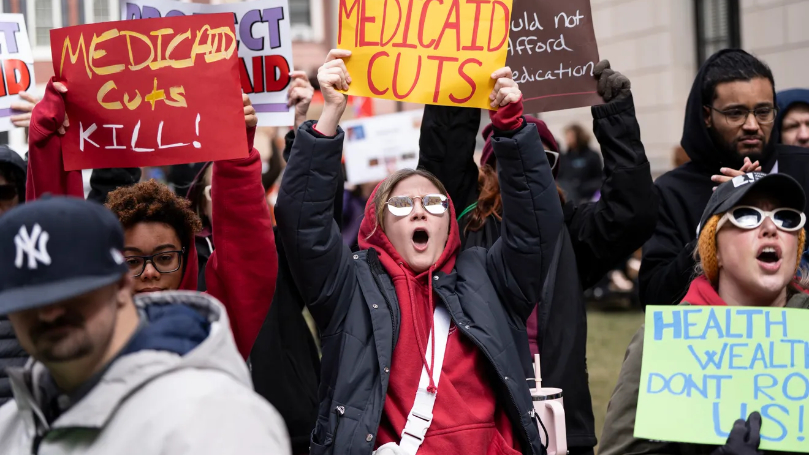
Naming the system: monopoly capital and the commodification of care
What we have described so far is a policy problem with identifiable bad actors. But it is also something more, and it is worth being clear about.
The Big Three PBMs are not rogue actors violating the rules of American capitalism. They are American capitalism…functioning exactly as designed. The practices that are destroying Kentucky’s independent pharmacies (vertical integration, extraction of profit, suppression of smaller competitors) are not aberrations. They are the logic of monopoly capital applied to healthcare.
Think of it this way: imagine the company that decides how much your small business gets paid for its work also owns your biggest competitor. That is the situation independent pharmacies are in. CVS owns both the PBM setting reimbursement rates and the pharmacy chain benefiting when those rates drive independents out of business. The FTC confirmed that the Big Three PBMs pay their own affiliated pharmacies better rates than they pay everyone else for the exact same drugs.
This is what Marxists mean by financialization: value not created through production or genuine service but extracted from a position of structural power. And when we ask why this was allowed to develop unchecked for decades, we arrive at a familiar answer: the PBM lobby is formidable. The state, under capitalism, tends to serve the interests of capital, occasionally reined in through popular pressure, but structurally oriented toward protecting the entities with the resources to shape policy.
What is being done — and why it is not enough
Some states have fought back. Arkansas became the first in the nation to ban PBMs from owning pharmacies outright. When Arkansas passed the law, CVS threatened to close all 23 of its stores in the state, which tells you everything about how central this conflict of interest is to their business model. Kentucky’s own Senate Bill 188 set minimum reimbursement rates and banned PBMs from forcing patients to use their pharmacies. These are real wins, fought for by real people, and we should say so clearly.
But we should also be honest about what they cannot accomplish. Reining in PBMs is mere harm reduction. If we stop the predatory fees, some pharmacies stay open another year. Some patients keep their pharmacist. We should support these fights, not because they fix the system, but because working people need their insulin today.
The trap of reformism, however, is leaving the underlying structure intact. Regulate the middleman, and the insurance company finds a new fee. Close one loophole, and the profit motive finds another. As long as healthcare is a commodity bought and sold for shareholder returns, access will always follow money rather than need. The pharmacies closing across Kentucky are not a malfunction of the system. They are the system working as designed: extracting profit from working-class communities until there is nothing left to extract.
What comes next
Marxists have a long tradition of supporting immediate, concrete relief for working people while maintaining clarity about what structural transformation requires. We support minimum wage increases while fighting for worker ownership. We support eviction moratoriums while organizing for public housing. PBM reform belongs in the same category. Support the fight, push for enforcement, demand action, and in the same breath, make the case for what lies beyond it. Because in the end, we do not need better PBMs. We need no PBMs.
In a single-payer system, such as Medicare for All, there is no need for a for-profit middleman. A public healthcare system would reimburse pharmacies directly for the cost of the drug plus the labor of the pharmacist. No clawbacks, no spread pricing. No steering patients toward PBM-owned pharmacies to boost an earnings report. The pharmacists would be reimbursed fairly, not because they successfully lobbied a state legislature against a billion-dollar lobby, but because the system was designed from the ground up to provide care.
And in a Marxist framework, a pharmacy would not be a small business fighting for survival against a corporate machine. It would be a community resource: collectively owned, collectively supported, and accountable to the people it serves rather than to shareholders. Under such a system, access to a pharmacy would not depend on whether a community is profitable enough to deserve one. Every resident of Hazard, Clay City, or Paducah, KY would have access.
The reality is, the map on the wall will still accumulate dots. Pharmacies will continue to close, and patients will suffer. Our job is to be present in that fight: to explain the mechanism clearly, to name the structural conditions that produce it, and to insist that the people losing access to their pharmacies understand not just who is responsible but why the system keeps producing the same result, and what it would actually take to build something different.
The opinions of the author do not necessarily reflect the positions of the CPUSA.
Images: Pharma. Facebook. NJ disability community rallies against Medicaid cuts by Anne-Marie Caruso/NorthJersey.com. Creative Commons.

 Join Now