

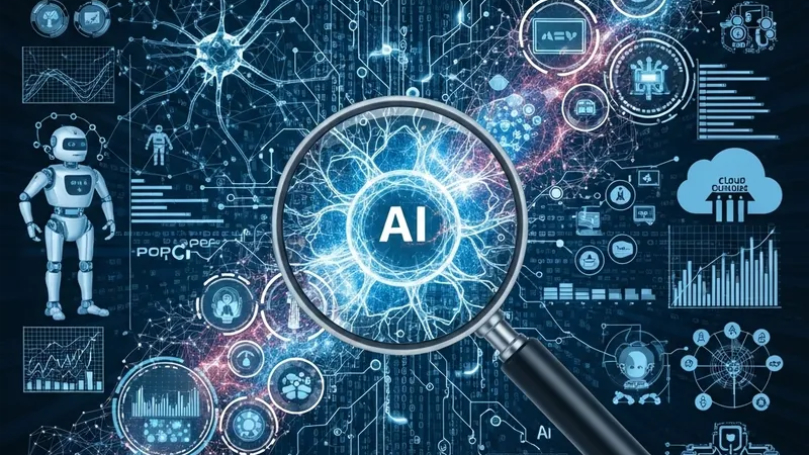
The American Economic Association (ASSA) Annual Meeting is a massive conference of economists from around the world, organized by the American Economics Association (AEA). Every year thousands attend and there are hundreds of sessions and papers. Most of the presentations are mainstream, but there are sessions organized by unorthodox ASSA organizations like the Union for Radical Economics (URPE). This year’s conference took place in Philadelphia.
For the second year in a row, according to Mike Roberts who comprehensively covers the conference each year from a Marxist perspective, “the dominating theme was artificial intelligence (AI) and its impact on economies. There was a livestreamed session entitled “AI and productivity: is this time different?” The assembled speakers pretty much agreed that AI would be a “game changer.”
Artificial intelligence (AI) is defined by the Merriam-Webster dictionary as “the capability of computer systems or algorithms to imitate intelligent human behavior.”
Rather than survey the papers and sessions, other than to note the staggering intellectual attention, this paper focuses on perhaps the most astounding recent AI achievement, and one with direct import to Marxist economics. That is, the big step toward Artificial General Intelligence (AGI) reflected in the work of Google’s DeepMind. For those interested, The Thinking Game, a well-produced documentary on AI breakthroughs leading to a revolutionary advance in “reinforced self-training” in AI models is recommended. It is now streaming for free on the Google DeepMind YouTube channel.
Deep Mind and Artificial General Intelligence (AGI)
Artificial General Intelligence (AGI) is a form of artificial intelligence.
As Google’s Gemini summarizes The Thinking Game:
The documentary chronicles the work of Demis Hassabis, founder and CEO of Google DeepMind, and his team, as they pursue artificial general intelligence (AGI) and breakthrough with AlphaFold-2, an AI system that solved the 50-year-old grand challenge of predicting protein structures from their amino acid sequences.
Demis Hassabis and John Jumper were awarded the Nobel Prize in Chemistry in 2024 for their work on AlphaFold-2. After an interesting start-up journey, DeepMind is now owned by Alphabet, Google’s parent. However, the relationship between DeepMind, a UK founded research lab, and Google appears to be one where Mr. Hassabis has a license to spend an open-ended amount of money in pursuit of a technology that could be the equivalent of the discovery of fire.
To appreciate the level of ‘intelligence’ DeepMind achieved, it is worth outlining the “protein folding problem.” This problem is a central challenge in biochemistry of predicting a protein’s final 3D shape from its amino acid sequence; crucial, because a protein’s shape determines its function, and misfolding causes diseases, like Alzheimer’s. This problem involves understanding the physical (DNA) code, the rapid folding process, Levinthal’s paradox, and computationally predicting the final structure, a feat largely addressed by AI tools like AlphaFold-2, which have revolutionized biology and drug discovery.
The problem was considered “not computable” for 50 years because the number of possible folding outcomes meant it would take longer than the age of the universe to compute the “minimum energy,” or “steady state” configuration.
Hassabis and John Jumper were awarded the Nobel Prize in Chemistry in 2024 for their work solving this problem using their most advanced agent, named ‘AlphaFold-2’. The Thinking Game brilliantly captures the internal moments of scientific discovery and the profound realization of AlphaFold-2’s potential impact on biology, medicine, and drug discovery.
For readers familiar with the “dialectics” of Marx, Lenin, Engels, Hegel — and game-playing-designing computer scientists! — the almost miraculous algorithm evolution DeepMind devised is not as surprising as for some others perhaps. Dialectics and game programming share some important features.
Game design logic and the dialectical logic of German philosopher Hegel are both founded on the principles of contradiction, differentiation and syntheses (“winning”–gaming, or reproduction–nature ) as central to understanding development in both nature, ideology, economics, and logics. And central to learning.
“Dialectic” comes from “dialogue,” the method of search for truth taught by Socrates. Using opposed or cooperating agents in a gameplaying environment was a key methodological innovation DeepMind deployed to accelerate the learning trajectories and the ability of the machines to “think abstractly,” and to “generalize” — summarization skills are essential for “original thought”.
Understanding context in society, nature, or ideology appears to us as both quantitative and qualitative dimensions of the reasoning process. The ancient Greek philosopher Xeno used the difficulty of truly defining the word “river” — something that is never the same from one moment to the next — as an example to students of the entangled and deeply contradictory forces of both time and space simpler models conceal. Game playing strategies mimic the dynamic aspects of dialectics, which asserts all nature — all — is always in motion and that qualitative change can be quantitatively grasped by machines programmed in rich game-playing environments. Both dialectical philosophy, and game-winning strategies, are struggle philosophies.
By demonstrating original and abstract reasoning, the Alpha 2 Agent demonstrates that, with sufficient power, it can mimic human training trajectories.
By demonstrating original and abstract reasoning, the Alpha 2 Agent demonstrates that, with sufficient power, it can mimic human training trajectories and do so at orders of magnitude greater speeds. It is difficult to understate the significance of algorithms that can be largely self-trained (via skillfully composed human-like environments) to achieve human level generalization and abstraction powers.
AI and the working class under U.S. monopoly capitalism
But, what does this matter for the wage earning class and its most unifying class-oriented ideology — Marxism?
AI is generating changes in the relations of production as profound and revolutionary as the discovery of fire.
AlphaFold-2 is the product of a creative process requiring the unimpeded “socialization of labor.” What does “socialization of labor” mean? It means the production of both goods and services becomes an ever more collective, social project as the means of production advances technologically. For example, today it takes over a million workers in over 43-50 countries to design, program and manufacture an iPhone, soon to be powered by Gemini, Google’s AI ChatBot interface, with DeepMind features soon if not already under the hood.
Plus, the gaming paradigms and environments used to train Alpha agents, or rather permit Alpha agents to train themselves, took decades to develop, and big investments in semiconductor technologies and materials science to realize.
The “socialization of labor,” and its inevitable collision with private property, remains one of Marx’s most profound forecasts about the trajectory of capitalism. V.I. Lenin sums up this feature of Marx’s analysis in his characteristic distilled form:
The socialization of labor, which is advancing ever more rapidly in thousands of forms and has manifested itself very strikingly, during the half-century since the death of Marx, in the growth of large-scale production, capitalist cartels, syndicates and trusts, as well as in the gigantic increase in the dimensions and power of finance capital, provides the principal material foundation for the inevitable advent of socialism.
That was over a century ago, where farm and manufacturing socialized labor swamped most work. Let’s summarize the ongoing, indeed accelerating, changes in the U.S. workforce that brings us to the radical changes now directly ahead of us:
- The current divisions of labor and work in the United States, aka the labor market, have already been undergoing accelerated transformation for decades.
- Capitalists use automation and globalization, under mostly U.S. imperial leadership, along with decades of labor union repression, to roll back the social democratic elements in the Roosevelt agenda and remove any obstruction that stood in the way of the ever greater global concentration of private capital, which in turn is used to again magnify the scale of production and magnitude of profits.
- The relations of production that prevailed in the 1930’s enabled a mass working class upsurge — literally multitudes of millions — to put capital on the defensive, and compel the capitalists to give ground for the establishment of social-democratic protections like industrial unionism, unemployment, retirement and health insurances, workday length limits and paid holidays. Those relations and the overall social division of work had an objective foundation in a concrete set of materials, tools and skills, and cooperative work capabilities.
- Those foundations have been expanded substantially with respect to both manufacturing and farm labor.
- The civil rights movements and mass upsurge, combined with the crisis over Vietnam, slowed down and stalled this corporate, billionaire takeback. Workers sought to expand the promises of the New Deal, as well as the anti-fascist and anti-imperialist democratic movements spawned world wide by the defeat of the Axis powers in WWII.
- The massive undemocratic concentration of wealth, however, did not cease, with its own corrupting consequences.
- Some may note an irony that the massive energies and scale that capital has combined in order to keep the rate of profit from falling has led to AGI. The investment frenzy into AGI depends on its ability to consume virtually all intellectual property with minimal interference. Without cheap data much of the Magnificent Seven’s — Alphabet (Google), Amazon, Apple, Meta Platforms (Facebook), Microsoft, Nvidia, and Tesla — wealth goes poof! Also gone: the source of surplus value too — unless there is only one property owner, and every one in the world pays rent.
AI is made possible in part by the scale of resources, especially capital and labor, that monopoly capital can command. But it is also true that acquiring the necessary data and model training resources requires trampling all over intellectual property rights as currently defined. The force of demand for AI development is so strong, however, the big platforms are overcoming every obstacle. It is unlikely that Supreme Court decisions coming on this question from lawsuits against Google by the NY Times will make any big change. Too much is now at stake.
Forecasts
I submit the following forecasts as challenges for us to think deeply about this subject. They are not determinative, but they reflect some of the powerful society-restructuring forces at work. Many of the consequences are unknown — like the actual reform movement, or revolutionary one, that will be required to bring down the fascist threat — and its billionaire encrusted heart.

Consider taking steps to educate yourself on this issue, both technically, economically and politically. There are numerous very good online courses from the major universities, Coursera, Udemy, and the Microsoft, Google, OpenAI and Anthropic platforms.
Resist being mystified. With a basic understanding of calculus, and some familiarity with a programming language, which all these resources provide, even the technical features are within reach; the core algorithms can be readily grasped.
The following are forecast:
- The “industrial proletariat,” meaning manufacturing workers, as Marx described it, will disappear with AGI directed systems.
- Ditto farm labor. Ditto agriculture.
- There are very few existing mechanical, technical tasks, including the reproduction and optimization of existing means of production or services, that efficient, self-learning machines cannot learn to perform.
- DeepMind’s “intelligence” is a layer above previous tools. It reflects a “collective intelligence.” The environments in which it is trained are mostly human environments. The “learning algorithm” is driven by reinforcement, or “rewards” the agent receives or loses being scored for success or failure managing all the objects in its virtual environment. The more human the environment, the more human the “intelligence.”
- There are very few existing service occupations that will not be similarly transformed. However, with respect to “service occupations” broadly defined as “things we do for each other,” such work has no known boundary, although capitalist “wage labor” must recede if commodities do — which must happen in any sector where “abundance of supply” is approached. The contradiction between abundance of supply and private property is plain and obvious. Capitalism requires scarcity to drive up prices. Abundant commodities produce no profit when items are exchanged.
- The “design space” of work is defined as the number and scale of projects that can be imagined within the technical, environmental, and “human capital” boundaries of a particular time. The scope of that “space” with AGI is magnified many times! Using an AI assistant, for example, I can code python programs three times faster, and with better quality code. That is a 300% productivity increase, and I am a modest programmer.
- The immense demand created by this potential will overcome all obstacles to AGI development, including energy and data aggregation — and will come into headlong conflict with the capitalist private property domination of the means of producing this scale of wealth and power.
- Further, the capacity to produce a significant proportion of the means of life at extremely low costs (and prices if you exclude monopoly ‘rents’) will provide further incentives to recede the domination of both commodities (‘traded’ goods and services), excessively large concentrations of private capital, and the wage labor system as well. Abundance in supply negates the circulation of capital and its twin, commodities, things produced for exchange. This is an objective foundation for Communist — commodity free, and thus classless — society.
The last item, capacity related, in this list of likely outcomes requires action by the working class to facilitate the passing of monopoly capitalism, and a fundamental change in the operation of the law of value — actually, its negation — in the succeeding society. Wherever scarcity in the means of life recedes, so do capitalist relations, including wage labor.
Chinese president Xi says the next 5 year plan will realize the “intelligent society” with a huge focus on AI.
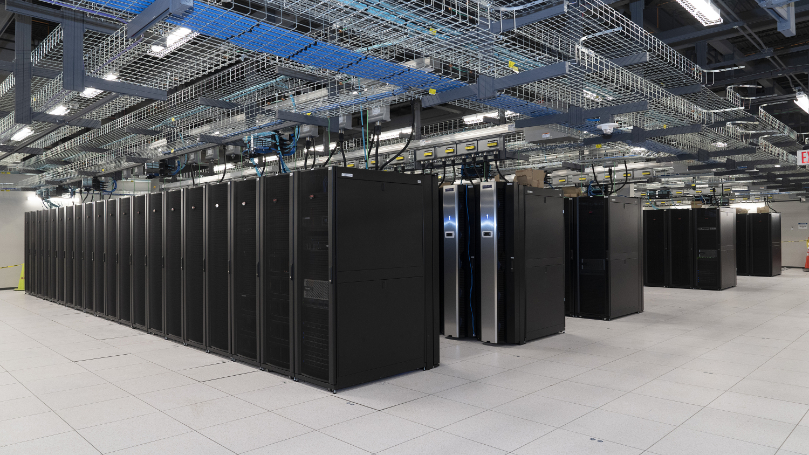
How does AI impact the labor theory of value?
The Labor Theory of Value (LTV) underpins Marx’s theory of surplus value, including profits.
It asserts that the exchange value of a commodity is determined by the socially necessary labor time required to produce it.
Key points:
- Source of value: Human labor is the sole source of economic value in commodities (goods and services produced for exchange/sale)
- Socially necessary labor time: This means the average amount of labor time needed to produce something under normal conditions with average skill and intensity — not just any individual’s labor time
- “Dead labor”: All non-labor inputs (raw materials, machinery, etc.) are themselves products of past labor, so their value also traces back to labor
- Surplus value: The foundation for Marx’s theory of exploitation — workers are paid wages for their labor power, but they produce more value than they receive, and capitalists capture this “surplus value” as profit
- Distinction from price: While prices fluctuate based on supply and demand in the market, Marx argued they fluctuate around an underlying labor-determined value
- Most importantly, LTV asserts that the source of all the creative content of a commodity — defined as an item produced solely or primarily for commercial exchange — is human labor.
Surplus value is surplus labor value above the wage paid; a portion of the creative input to production that returns more than the wage. In modern terms, this value accounts for all rents, interest and profits, both retained and distributed as dividends. The U.S. Bureau of Economic Analysis also classifies surplus and compensation for capitalist enterprises in this manner in its gross domestic income and product accounts.
The labor theory of value was roughly true not only to Marx, but other classical economists such as Adam Smith and David Ricardo. All other inputs are, on average, purchased at their market value. Someone else made the surplus, and profit, on those inputs. This is the logic, and intuition of the theory.
The story of DeepMind argues strongly that AGI agents — intelligent machines — are, or will soon be, capable, of creative input to the production process.
The story of DeepMind, and other recent advances, argue strongly that AGI agents — intelligent machines — are capable, or will soon be capable, of creative input to the production process.
Does this change the labor theory of economic and exchange value? Are there “non-human creative inputs” to the production process (either goods or services)?
There appear to be two ways to approach this question.
One way involves asking if intelligent machines cross a boundary between human and machine. We eat a wide range of earthly fruits and flesh. AI eats electricity and data. Seems a simple distinction, and yet that might become a more complex philosophical — and biochemical — question than previously imagined. Seems far-fetched, but so do the results of recent AI success stories.
However, another approach is to ask: “Does AI bring down the unit cost of production of some set of human wants or needs towards zero?” It promises solutions and opportunities that have global, indeed solar system impact. But it demands both immense water resources and electric power and a centralization, or collectivization, of even more immense stores of data — memory.
If the answer is yes, then it means some objective foundations of capitalism are disappearing in those sectors, since approaching zero cost is equivalent to approaching abundance. Capitalism makes no profit from abundance. It is based on the circulation of things produced precisely for circulation, because they are scarce. We trade other scarce commodities — like the wages (universal equivalents) paid for our labor power. Monopoly capital, instead of regulated, equitable, more socialist control over these resources (especially the energy and data), becomes more absurd with each passing day of the Trump administration, and with the historical development of productive capacity.
If the answer is no, if monopoly capitalist relations cannot reproduce themselves at the growth and productivity and profitability scales demanded by AI tech, then the conflict with monopoly will become more revolutionary, more volatile, and more dangerous perhaps in retreat than when it reigned supreme.
The age of abundance, and the advance of commodity-free relations is before us. But the monopoly capital form must be superseded. Further, the nation state must be superseded. The chief political tasks of our era.
Labor Theory of Value critics
The Labor Theory of Value has critics. Indeed most economists, even liberal ones, ignore it, even though they agree that “it makes sense.” It will probably always have critics as long as bourgeois capitalist economic relations are dominant.
To the capitalist, investment, not labor, is the “primary creative” input into the production process. It matters little if the accumulated capital also arose from “surplus labor.” Their focus is on “price theory,” whose subjects are cost of production, supply and demand. “Value” and “price” are in practice synonymous to them. By contrast, in Marx’s framework, supply and demand cause prices to fluctuate around value, but not replace it.
The Labor Theory of Value also asserts that all non-labor-power inputs, such as manufactured or extracted (mined) inputs, are themselves “dead labor” inputs, products of “labor-power” and even older, deader “labor power” inputs. Thus Marx’s famous expression: the exchange value of a commodity is the “socially necessary labor time required to produce it.” The LTV gets philosophical, fast.
Critics — even before AI — point to the fact that models of prices do not consistently correspond to various measures of “labor time” inputs. This is true, but also a kind of trick argument. Truly disentangling the labor-power components in modern production to compute prices converging with “the socially necessary units of labor-time” is a complex, recursive computation with literally millions of parameters. It still remains non-computable, especially since the expression “socially necessary” contains qualitative in addition to quantitative constraints. On the order, indeed, of the Folding Problem.
So, what is “socially necessary labor time?”
Let us say that this expression is not well defined by Marx. Partly this is due to lack of sufficient data about demand and prices in early years of economics, which was still often called “natural philosophy,” and still relied heavily on analytical skills, like much of science. But time has redoubled the complexity.
Ergo, “socially necessary labor time” is not (yet) an entirely materialist expression. That does not prove it wrong; it just means it has not been proven yet.
All prices under capitalism likely do converge to units of time, as implied by Marx, and logic infers. Otherwise one is left with Keynes “animal spirits in the human breast” to explain economic value beyond “something somebody wants” — hardly “materialist” at all!
On the plus side, maybe AI soon can solve the LTV paradox, like it recently solved the “protein folding problem;” previously not computable.
However — counting how short, or not, our pay is — that’s not the point, nor the promise of AI. The promise is to steadily rid society of commodity relations altogether, and class society with it!
U.N. Control of AI!
It is bigger than any nation.
The opinions of the author do not necessarily reflect the positions of the CPUSA.
Images: Decoding Cutting-Edge Developments in Artificial Intelligence by Easy-Peasy.AI. Free to use with a backlink to Easy-Peasy.AI. US Government Materials License. Rally for #NetNeutrality in Boston, Dec. 7, 2017 by Tim Carter. CC BY 3.0 US. The original Scientific Data and Computing Center (SDCC), formerly known as the RHIC and ATLAS Computing Facility by U.S. Department of Energy. United States Government Work license.
Author

John Case is a former electronics worker and union organizer with the United Electrical, Radio and Machine Workers (UE), also formerly a software developer, now host of the WSHC "Winners and Losers" radio program in Shepherdstown, W.Va.
 Join Now