

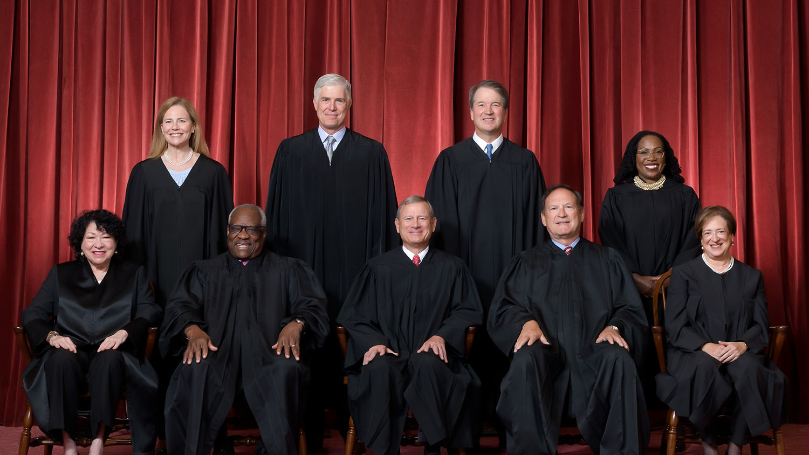
If you are reading this article, the 2025-26 term of the Supreme Court of the United States has come to an end. The High Court voted along ideological lines in its highest profile cases. Cases involving transgender healthcare, religious parent opt-out rights, voting rights disputes, and national injunctions were determined by 6-3 votes. The recent term of the Roberts Court has drawn intense scrutiny from labor advocates, civil rights groups, and immigrant rights organizations because multiple rulings have been viewed as narrowing protections for employees, racial minorities, LGBTQ people, and undocumented immigrants. The following term review and analysis, although not exhaustive, examines some of those cases.
High-profile 6-3 ideological decisions
One of the Court’s most consequential rulings involving immigration and undocumented immigrants came in Trump v. CASA. Despite being widely described as the “birthright citizenship case,” the Supreme Court in CASA did not decide whether President Trump’s executive order restricting birthright citizenship was constitutional but rather addressed a procedural question, to wit: Can federal district courts issue nationwide injunctions that prevent the federal government from enforcing a policy against anyone in the country, including individuals who are not parties to the lawsuit? Justice Barrett wrote for the majority.
The conservative majority determined that universal injunctions “likely” exceed the equitable authority granted to the federal courts by Congress. Moreover, the Court went on to say that federal courts may generally provide relief only to those plaintiffs before them. Ultimately, the Court partially stayed the lower-court injunctions and directed lower courts to determine a path of narrower relief sufficient to protect the case’s named plaintiffs. The Court did not go so far as to rule that Trump’s executive order was constitutional and declared the only issue before it was to determine the scope of judicial remedies, not the legality of birthright citizenship. Justice Sotomayor wrote the principal dissent, joined by Justices Kagan and Jackson.
The dissent argued that the majority elevated procedural concerns over constitutional rights and if the federal policy is unconstitutional, courts must be able to stop its enforcement universally. The decision, however, does not preclude plaintiffs from seeking relief through class actions, state lawsuits or declaratory judgment actions. The ruling did not directly decide the constitutionality of efforts to restrict birthright citizenship. Thus, the 1898 case of United States v. Wong Kim Ark remains the law of the land and holds that a child born in the United States to noncitizen parents who were legally domiciled here was a U.S. citizen at birth. But immigrant rights advocates argue that CASA makes it harder to block federal immigration policies nationwide while litigation proceeds and favors aggressive executive enforcement actions while at the same time weakening judicial checks.
This issue of gender affirming care restrictions came before the Court in the case of United States v. Skrmetti. This case challenged a Tennessee law that prohibited physicians from prescribing puberty blockers or hormones to minors for the purpose of gender transition, while permitting some of the same medications for precocious puberty and certain endocrine disorders. Plaintiffs argued the Tennessee law violated the Equal Protection Clause because it discriminated based on sex and transgender status.
Chief Justice Roberts, writing for the majority, declared the Tennessee law did not classify individuals based on sex or transgender status in a way that would require heightened constitutional scrutiny. The Court characterized the Tennessee law as simply regulating medical treatments based on age and purpose for which the treatment is prescribed. The Court noted that Tennessee had asserted a legitimate interest in protecting minors when addressing scientific uncertainty related to pediatric gender transition treatments. Roberts’s decision fell in line with judicial restraint, which was a recurring theme throughout his opinion, i.e. whether Tennessee’s policy violated the Constitution.
In her dissent, Justice Sotomayor argued that the majority mischaracterized the law. The dissent contended that Tennessee’s statute necessarily classifies based on sex because a physician must know a patient’s sex to determine whether treatment is lawful. And because Court precedent involving sex discrimination required a heightened scrutiny of judicial review, reasoning would conclude Skrmetti required at least an intermediate scrutiny analysis. Skrmetti is the Court’s most important transgender rights decision to date because its ruling upheld Tennessee’s law and strengthened the legal position of more than two dozen states that enacted similar restrictions.
In Mahmoud v. Taylor, a school district in Montgomery County, Maryland required elementary school students to participate in instruction involving LGBTQ+ inclusion storybooks without providing religious parents notice and an opportunity to opt out their child’s attendance. Muslim, Catholic, Orthodox Christian, and other religious parents objected to the school district’s elimination of an existing opt-out policy. The school board argued the books were intended to promote inclusion and respect for diverse identities and that widespread opt-outs created burdensome administrative difficulties.
The Court held Montgomery County violated the Free Exercise Clause of the Constitution when it required elementary school students to participate in instruction involving LGBTQ+ inclusive storybooks absent an opt-out policy. The Court’s holding is that government burdens religious exercise when it compels children to participate in instruction that poses a “very real threat” to the religious beliefs parents seek to instill in them. The majority relied heavily on Wisconsin v. Yoder, which protected Amish parents from compulsory high school attendance requirements.
In dissent, Justice Sotomayor argued the majority dramatically expanded the Free Exercise doctrine because public schools routinely expose students to ideas that differ from their families’ beliefs. Moreover, the Court has never considered exposure a constitutional injury. The dissent went further and warned the decision threatens the traditional mission of public education by allowing parents to demand exemptions whenever instructional content conflicts with religious beliefs. A criticism can be made that the majority opinion provides little guidance on which instructional content triggers a constitutional burden on religious exercise. The Mahmoud decision is one of the most significant First Amendment and education decisions to come out of the Roberts Court. From a constitutional law perspective, Mahmoud may be remembered as the education counterpart to other major Roberts Court religious liberty cases, such as Kennedy v. Bremerton School District, Carson v. Makin, and Fulton v. City of Philadelphia.
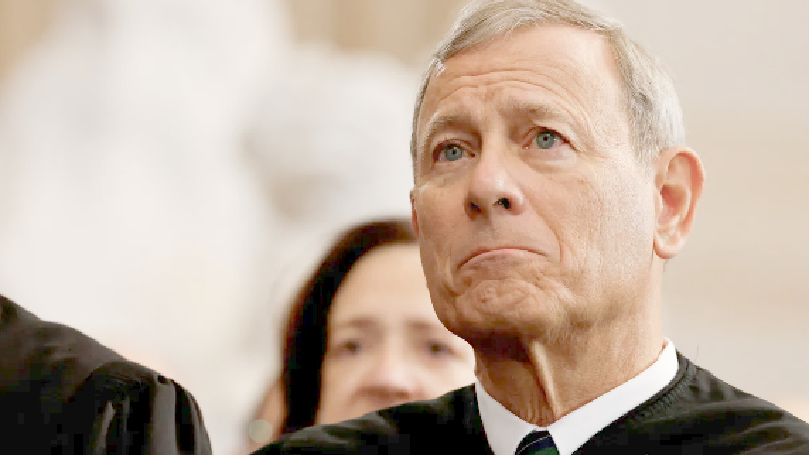
Not since Shelby County v. Holder (2013) has the Court decided a more consequential voting rights case than it did on April 29, 2026 when its decision was announced in Louisiana v. Callais. The case arose after Louisiana created a second majority Black congressional district in response to earlier litigation finding that its previous map likely violated Section 2 of the Voting Rights Act.
White voters challenged the new map as an unconstitutional racial gerrymander. The fundamental question for the Court was: Can a state intentionally use race to create majority-minority districts in order to comply with Section 2 of the Voting Rights Act? The Court’s answer was no, unless the state can satisfy a more demanding standard than lower courts had previously applied.
Justice Alito, writing for the majority, held that because Section 2 of the Voting Rights Act did not actually require Louisiana to create a second majority Black district, Louisiana lacked a compelling interest in justifying race-based districting, therefore making the map unconstitutional under the Equal Protection Clause. The Court affirmed the lower court’s conclusion that Louisiana’s District 6 was an unconstitutional racial gerrymander.
Justice Kagan’s dissent argued that the majority effectively rewrote Section 2. The dissent further contends that Congress deliberately adopted an effects-based framework after earlier Supreme Court decisions made intentional discrimination difficult to prove. The dissenters argue the majority disregarded decades of precedent, imposed requirements not found in the statute, and substantially crippled one of the Voting Rights Act’s principal enforcement mechanisms.
On June 2, 2026, the Court, in a 6-3 vote, granted Alabama’s emergency request to use a congressional map that reduces the number of majority Black districts before the 2026 elections. The ruling is in line with Callais and widely viewed as another major limitation on Voting Rights Act districting claims.
Immigration and undocumented immigrants
In Urias-Orellana v. Bondi, the Court unanimously decided that federal courts of appeals must apply a highly deferential substantial evidence standard when reviewing immigration agency determinations that an asylum applicant has not established “persecution” under the Immigration and Nationality Act (INA).
Urias-Orellana addresses one of the most important questions in asylum law, to wit: How much authority do federal courts have to second-guess immigration judges and the Board of Immigration Appeals (BIA). This case is one of the most important immigration decisions during the Court’s term. The Urias-Orellana decision does not change the substantive definition of asylum, but it significantly reduces the likelihood that federal courts will overturn asylum denials once the Immigration Judge and BIA have ruled against the applicant.
Viewed alongside Trump v. CASA, Urias-Orellana reflects a recurring theme: greater deference to executive branch immigration decision making, narrower judicial intervention; and an emphasis on statutory limits on judicial review. Unlike CASA, however, Urias-Orellana was not ideologically divisive. It represents a rare area where all nine justices agreed that Congress instructed courts to defer substantially to immigration agencies.
Noem v. Vasquez Perdomo is a case in which the plaintiffs challenged immigration sweeps conducted in the Los Angeles area. A federal district court found that plaintiffs were likely to succeed on claims that immigration officers were making stops based on factors such as apparent race or ethnicity, speaking Spanish or with a Spanish accent, being present at locations where day laborers congregate, bus stops, car washes, and agricultural workplaces.
The Court, by a 6-3 vote along ideological lines, stayed the lower court’s injunction. Justice Sotomayor, joined by Justices Kagan and Jackson, in a sharply worded dissent, argued that the lower court had found substantial evidence that individuals were being stopped because they looked Latino, spoke Spanish, were low-wage earners, or appeared at locations associated with immigrant workers. And that those factors, even combined, do not create reasonable suspicion under the Fourth Amendment.
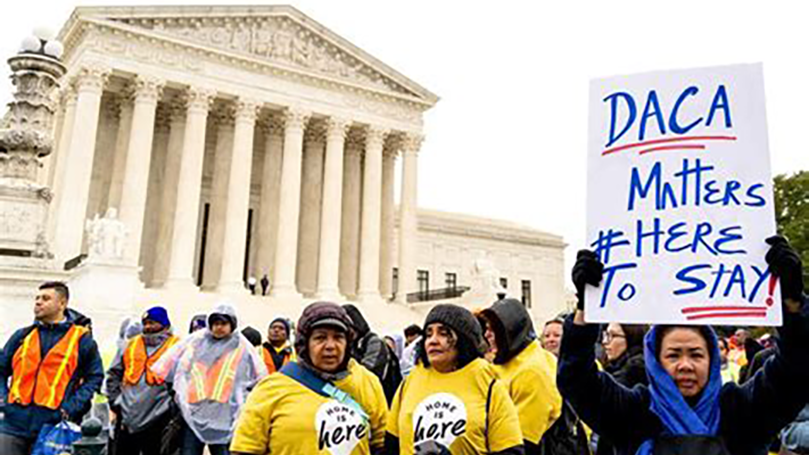
The Court has also shown an openness to Trump administration efforts to terminate or narrow Temporary Protected Status (TPS) protections for migrants from countries such as Venezuela, Haiti, and Syria. Cases involving TPS are viewed by advocates as particularly important because they affect hundreds of thousands of immigrants who have lived and worked legally in the United States for years. Noem v. National TPS Alliance was the Court’s most important TPS ruling of the term.
The Trump administration sought to terminate TPS protections for hundreds of thousands of Venezuelans. A federal district court blocked the action, but the Supreme Court, by a 6-3 vote, granted the government’s emergency stay application, which allowed the administration to proceed with TPS termination while litigation continued. This matters because the Court did not decide the ultimate legality of the TPS termination, but it permitted the policy to take effect pending appeal. Critics argued the ruling exposed TPS holders to loss of work authorization and possible deportation, while supporters argued the TPS statute gives the Secretary of Homeland Security broad discretion. This decision reflects two glaring themes of the Roberts Court — deference to executive immigration authority and skepticism toward broad lower court injunctions.
After the Supreme Court’s stay order, the Ninth Circuit ultimately ruled that Secretary Noem exceeded her statutory authority in attempting to vacate and terminate TPS designations for Venezuela and Haiti. The court held the TPS statute did not authorize the actions taken by DHS. The Ninth Circuit emphasized that Congress intended TPS to be a predictable and stable form of temporary protection and concluded that the Secretary’s actions conflicted with the statute. Stand by — the Supreme Court may ultimately review the merits of those rulings.
Blanche v. Lau is one of the most important immigration cases of the term. The case concerns the rights of lawful permanent residents, those with green cards returning from brief trips abroad when they have been accused, but not convicted, of crimes. Lau became a permanent resident in 2007. In 2012, New Jersey charged him with trademark counterfeiting. Before the criminal case was resolved, he briefly traveled to China and then attempted to return to the United States. Normally, a lawful permanent resident returning from a temporary trip abroad is treated as already admitted and does not have to seek readmission. However, immigration officials invoked an exception allowing a lawful permanent resident who has “committed” certain crimes to be treated as seeking admission. Instead of formally admitting Lau, they paroled him into the country pending resolution of his criminal case.
The issue before the Court was whether border officers must possess clear and convincing evidence at the time of reentry that a lawful permanent resident committed a crime involving moral turpitude before treating the person as an applicant for admission? The Second Circuit Court of Appeals said yes, but the Supreme Court disagreed. Justice Thomas, writing for the 6-3 majority, focused on statutory text.
The majority emphasized that Congress did not impose a clear and convincing burden at the border, and the government’s burden of proof applies at removal proceedings, not necessarily at the moment of inspection at the border.
Justice Jackson, in her dissent, emphasized a basic principle: People are presumed innocent until proven guilty.
In Mullin v. Doe (consolidated with Trump v. Miot), a 6-3 majority ruled for the Trump administration and held that the TPS statute largely bars judicial review of decisions to designate, extend, or terminate TPS. The Court reversed lower court injunctions that had prevented the termination of TPS protections for Syrian and Haitian nationals. The Court’s majority broadly interpreted the applicable federal code. The Court did not completely eliminate judicial review but made it a higher hurdle to clear.
Employees and Labor Rights
The conservative majority of the Court has continued limiting the power of federal agencies that regulate workplace safety, labor standards, and discrimination enforcement. While not always framed directly as “anti-worker,” these rulings are widely seen by unions and worker advocates as weakening federal protections by making it harder for agencies to interpret and enforce labor laws expansively.
Labor advocates argue that aggressive immigration enforcement has a chilling effect on wage theft complaints, union organizing, and discrimination reporting among immigrant workers.
The Court’s recent jurisprudence emphasizing textualism and skepticism toward broad agency authority has encouraged efforts to narrow doctrines such as “disparate impact” to the extent that civil rights organizations argue this weakens workplace discrimination protections for racial minorities and women.
Mifepristone
On May 14, 2026, the Court issued an emergency stay blocking a ruling by the 5th U.S. Circuit Court of Appeals that would have required women to obtain mifepristone in person. The stay order allows patients to continue receiving prescriptions through telehealth appointments and have the medication delivered by mail or picked up at pharmacies nationwide.
Mifepristone was approved by the FDA in 2000 and is used in combination with misoprostol to terminate early pregnancies. It accounts for roughly 63% of U.S. abortions as of 2023. In 2023, the FDA eliminated the in-person dispensing requirement, allowing telehealth prescriptions and mail delivery. Louisiana challenged this rule, arguing it undermined the state’s near total abortion ban and violated federal law. The 5th Circuit initially sided with Louisiana, temporarily reinstating the in-person requirement, which prompted the Supreme Court’s emergency intervention.
Access to mifepristone remains uninterrupted in states where abortion is legal, including telehealth and mail delivery. Patients in states with abortion bans may still face legal complexities, but telehealth providers in legal states can continue serving them under shield laws. The ruling is temporary and the case will be returned to the 5th Circuit for a full merits review, and further appeals to the Supreme Court are possible. Misoprostol, the second drug in the regimen, is not affected by this ruling and can still be used independently, though with slightly higher failure rates.
Gun Possession and Drugs
A unanimous Court ruled that the federal government cannot prosecute a person on charges they violated a federal law when knowingly possessing a gun while being an unlawful user of a controlled substance (see United States v. Hemani). Ali Danial Hemani, a daily cannabis user, was charged with violating federal law. Justice Neil Gorsuch, writing for the Court, emphasized the government was seeking to “automatically strip Hemani of his Second Amendment right to possess a firearm” based only on a showing that he “regularly uses any amount of any controlled substance.” Gorsuch asserted his conclusion because the early U.S. laws on which the government relied to support these restrictions “targeted different kinds of people, did so for different reasons, and operated in different ways.”
Takeaways from This Term of the Roberts Court
The term revealed several recurring patterns in the Roberts Court: (1) greater deference to executive authority in immigration enforcement; (2) reduced willingness to allow nationwide judicial blocks of federal policies; (3) skepticism toward expansive interpretations of civil rights statutes; (4) limits on federal administrative agencies; and (5) stronger emphasis on originalism and textualism.
Finally, earlier this year President Trump was not pleased with the Court’s February ruling striking down his global tariffs. So much so that he posted on Truth Social that Roberts and the other justices were disloyal and unpatriotic. Roberts, who authored the tariff ruling, used a March appearance at Rice University’s Baker Institute to publicly rebuke the escalating trend of personal, hostile attacks aimed at judges, declaring that such rhetoric is “dangerous” and “has got to stop.”
The opinions of the author do not necessarily reflect the positions of the CPUSA.
Images: Supreme court. Public domain. Justice Roberts. Public domain. DACA supporters rallied outside the Supreme Court in November 2019 as the court heard arguments about the future of the program by Victoria Pickering. CC BY-NC 2.0.
Author

Patrick N. Chapin is a retired litigator, trial attorney, and ordained Buddhist Priest in the Navayana tradition.
 Join Now