

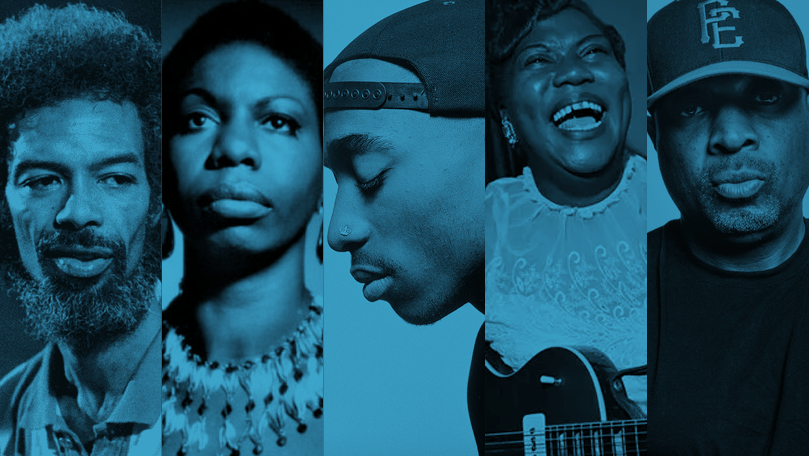
Music has always played a significant and critical role in how African Americans communicate with each other and the outside world. This form of communication began during the period of enslavement and continues today.
Slave songs, as musicologists refer to them, were frequently used to communicate planned escapes and other forms of resistance. But more often were used to reinforces the notion that slavey was a terminal condition, and that freedom lay in the future.
One of the most popular songs was “Swing Low Sweet Chariot,” which is still often sung in African American churches. It was a regular part of many of Paul Robeson’s concerts.
The image of a chariot can refer (especially as the anti-slavery movement in the North began to grow) to friends in the North, but can also refer to deliverance from slavery through God. The reference to the Jordan River, is also presumed to be a reference to crossing the “Mason-Dixon” line, which separated the South from the North.
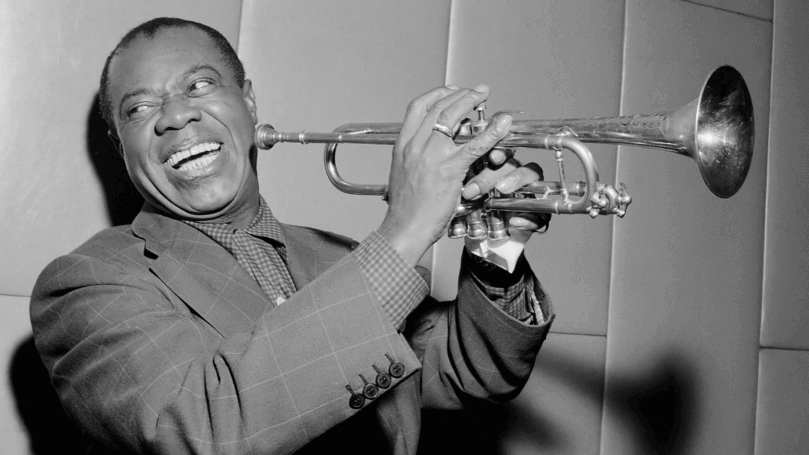
Another form of music which had a considerable influence — jazz — has been a significant aspect African American music since the early 1900s. And has made significant contributions to the culture of African Americans. Although most jazz is predominantly instrumental, it has long contributed to progressive politics.
In 1963, the Ku Klux Klan dynamited an African American church in Birmingham Alabama, which was the center of local civil rights activism. In the bombing, four young African American girls — ages 11 to 14 — were killed. In reaction to the bombing John Coltrane, one of the most gifted and creative musicians in jazz, wrote a song entitled “Alabama.” Since most jazz is instrumental, the meaning of the song has to be interpreted through chord structures and melody, rather than lyrics.
In addition to jazz songs that reflected the Civil Rights Movement, many jazz musicians used their platform to reject the U.S. involvement in the Vietnam War. In 1969, Leon Thomas, a singer and percussionists, released a album which included an original song entitled, “Damn Nam – Ain’t Going to Vietnam.” In addition to singing, Thomas also utilized a vocal form (similar to yodeling) that he had learned while traveling through Africa in the 1960s.
In addition to jazz, many R&B singers have recorded and performed songs representing the African American freedom struggle. At the top is Sam Cooke’s “A Change is Gonna Come.” It was released in 1964 and became an anthem for the Civil Rights Movement. It was released as the “B” side of a record. The “A” side was a song called “Shake” which hit number one of the R&B chart.
“A Change is Gonna Come” was written by Sam Cooke. Its inspiration came from his failed attempt to rent a hotel room in the New Orleans French Quarter. Much later, “A Change is Gonna Come” was rated by Rolling Stone magazine as the 12th greatest song of all times. In 2007 it was selected for preservation by the Library of Congress, deeming it “culturally, historically, or esthetically” important. The title of the song is on the wall of the Smithsonian Museum of African American History. (I’m assuming Trump hasn’t removed it yet).
In addition, in the 1960’s, James Brown released a song entitled, “Say It Loud: I’m Black and I’m Proud.” This was at a time when African Americans were struggling on what to call themselves — or how to define their ethnicity. Historically African Americans had been referred to as “colored” or “Negro.” Younger African Americans began to reject both of those labels and began referring to themselves as Black (later to be renamed as African American). Brown’s song, which was a big hit, played an important role in this transition.
More African American artists began to take on social issues, rather than just sing about love and romance. The Temptations, a popular group with Motown Records, issued a song entitled “Ball of Confusion,” which brought out some of the social issues that were harming the African American community.
In the early 1980’s there was developing a broad national movement to name Martin Luther King’s birthday as a holiday. This was during the Reagan administration and there was a lot of push back to deny that demand. Stevie Wonder, another prodigy of Motown Records, released a song in 1980 entitled “Happy Birthday,” which was a demand for making King’s birthday a holiday. This song gained wide popularity throughout the U.S. and played a significant role in establishing the holiday.
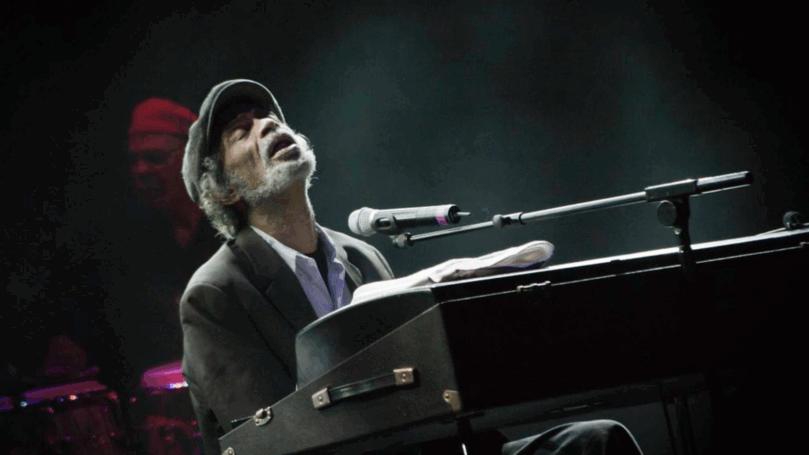
In addition, there were poets such as Gil Scot-Heron and the Last Poets, who both created poetry that addressed political issues in the United Sates — especially those issues facing the African American community. Gil Scot-Heron released a song called “Johannesburg” on 1976, which became a popular rallying cry for the end of Apartheid in South Africa.
Hip-Hop, as a musical and poetic form, has also addressed important social issues in the African American community. Artists such as Nas, use lyrical story-telling to address social issues facing the African American community. In addition, Public Enemy, KRS-One, 2Pac, and Kendrick Lamar have contributed to this stream of artistic expression.
Note: All songs mentioned above are available through Apple Music or Spotify.
The opinions of the author do not necessarily reflect the positions of the CPUSA.
Images: African American artist collage. Fred Barr. CPUSA; Louis Armstrong. National Archive/Creative Commons; Gil Scott-Heron performs at WOMAD in 2010. Stuart Madeley. Flickr/Creative Commons.
Author

-
Timothy V Johnson is a member of the African American Equality Commission CPUSA.
 Join Now