In many lands for many centuries, May celebrations marked the coming of spring and the renewal of earth, crops, and life for the masses of people. In our time, May Day, the international holiday of the labor and socialist movements, developed out of labor’s struggle against exploitation and socialism’s dedication to the regeneration and empowerment of the working class. And May Day began in the United States, even though its capitalist class has always sought to erase that point from the consciousness of the American people.
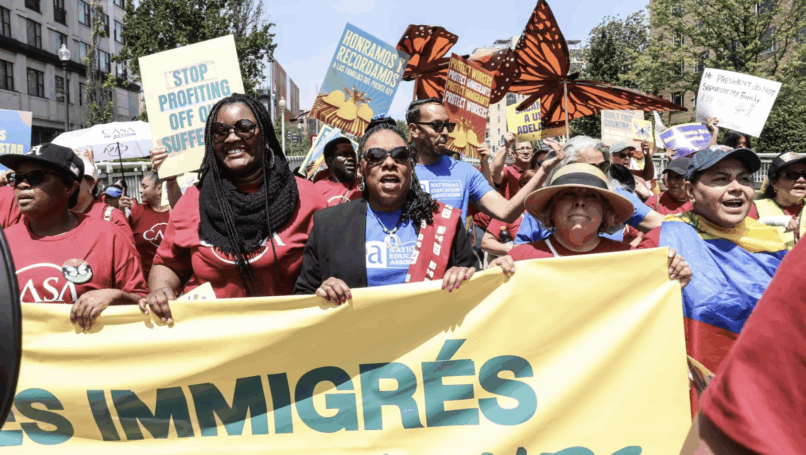
May Day 2026 promises to be a day of massive labor-led all-people’s resistance to Trump’s racist, anti-woman, anti-democratic and anti-worker administration. This year’s May Day is an opportunity to say “No” to the chaos, war, and inhumanity of the MAGA/Trump policies and actions.
 May Day’s roots are in the peaceful demonstrations of hundreds of thousands of U.S. workers in Chicago, New York, Pittsburgh, and other cities on May 1, 1886, for the eight-hour day. Supported by the Knights of Labor, the new American Federation of Labor, and by various labor anarchists and socialists, the demonstrations were denounced by the capitalist press as conspiracies to revive the Paris Commune in the U.S.
In Chicago three days after the May 1 demonstrations, labor anarchists organized a protest demonstration after the police killing of strikers at the McCormick Harvester plant.
After a bomb was thrown at the large contingent of police there to intimidate the demonstration, the ensuing police riot, national Red Scare, and arrest and trial of eight of the demonstration’s leaders (four were executed), made Haymarket an international symbol of capitalism’s war against the working class. With the Haymarket struggle as their precedent, an international Congress of Socialists, meeting in Paris in 1889 in the centennial of the French Revolution, designated May 1st as a day of demonstrations for the eight-hour day throughout the world.
As the socialist movement grew and a Second International of socialist parties developed in the 1890s out of the Paris meeting, May Day became an annual event, reflecting both workers’ pride and militancy. The importance of the first demonstrations was noted. Although Karl Marx had passed away earlier, Friedrich Engels noted of the first 1890 demonstrations in Britain, which took place on May 4 in honor of the Haymarket martyrs, “more than 100,000 in a column, on 4th May 1890, the English working class joined up in the great international army, its long winter sleep broken at last.”
As the May Day demonstrations grew, they interacted with the rise of the new socialist parties and the growth of the Second International. In the U.S., the depression which began in 1893 led Congress to establish a national Labor Day on the first Monday in September. Initially proposed by a social democratic trade unionist, it was seen by some as an “alternative to May Day,” but it soon became a complement to the May Day demonstrations.
In 1902, the year he wrote What Is to Be Done?, Vladimir Lenin, the most important theorist/activist of what became the Communist (Marxist-Leninist) wing of the socialist movement, wrote: “It should have been added that in our country May Day also becomes a demonstration against the autocracy, a demand for political liberty. Pointing to the international significance of the holiday is not enough. It must also be linked with the struggle for the most vital national political demands.”
As the mass social democratic parties grew, as Lenin would observe, “a struggle was raised in all the social democratic parties, between the revolutionary and opportunist wings.” The coming of the First World War led the vast majority of social democratic parties in countries at war to support their governments. In the Czarist Russian Empire, the revolutionary socialist (Bolshevik) wing of the already divided Russian Social Democratic Labor Party actively opposed the war and transformed the conflict to first overthrow the Czarist regime and then turn the revolution into a socialist revolution.
Soon, socialist parties were divided throughout the world between revolutionary and reformist factions. The Soviet revolution made May Day a national holiday and defined it as a day of struggle for proletarian (working class) internationalism and against imperialism and war.
As a new Third (Communist) International came into existence, it brought May Day’s message to the colonies and semi-colonies of the world, especially to the world’s two largest populations, China and India, as it sought to advance both national liberation and the development of Communist movements and parties globally.
In the interwar period, Communist and Socialist parties, while they never reunited and became rivals, continued to celebrate May Day along with working class organizations. In colonial regions, May Day demonstrations were often suppressed and their leaders arrested.
When Hitler established a full-fledged dictatorship following the Reichstag Fire in Germany (1933), he suppressed and imprisoned Communists, eliminated all independent trade unions, outlawed the use of the word proletarian and declared May First to be “National Day,” a national holiday celebrating the militarist and racist ideology of the regime. After the defeat of fascism and the collapse of the colonial empires following WWII, May Day became the most widely celebrated day in the world.
But May Day continued to be an expression of the class war between capital and labor. In the U.S., for example, May Day was not formally banned, but permits for demonstrations became nearly impossible to get. A 1950 May Day demonstration in New York’s Union Square was broken up by police with assaults and arrests of demonstrators. The Eisenhower administration declared May 1st “Law Day,” which had little success in stirring up conservative “law and order” demonstrations.
But opposition to Cold War repression, McCarthyism, grew by the 1960s and May Day demonstrations returned, with CPUSA activists playing a leading role.
Even after the fall of the Soviet Union and its Warsaw Treaty allies (1991), May Day demonstrations continue to be held in these countries by increasing numbers.
In the People’s Republic of China, the nation with the world’s largest population, May Day has been seen as the most important national holiday since its inception with an estimated 340 million people traveling and participating in both recreational and political events last year.
Even in these times of fascistic reaction, led globally by Trump’s “Make America Great Again” regime, May Day this year will reach hundreds of millions of people with its commitment to the struggle for working class unity, peace, and socialism. In the words of the International, May Day, like the working class itself, unites the people of the whole world.
The opinions of the author do not necessarily reflect the positions of the CPUSA.
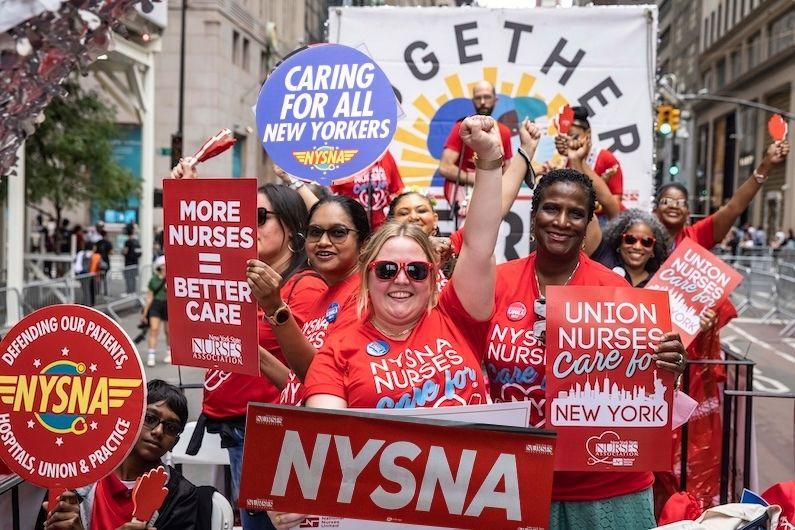
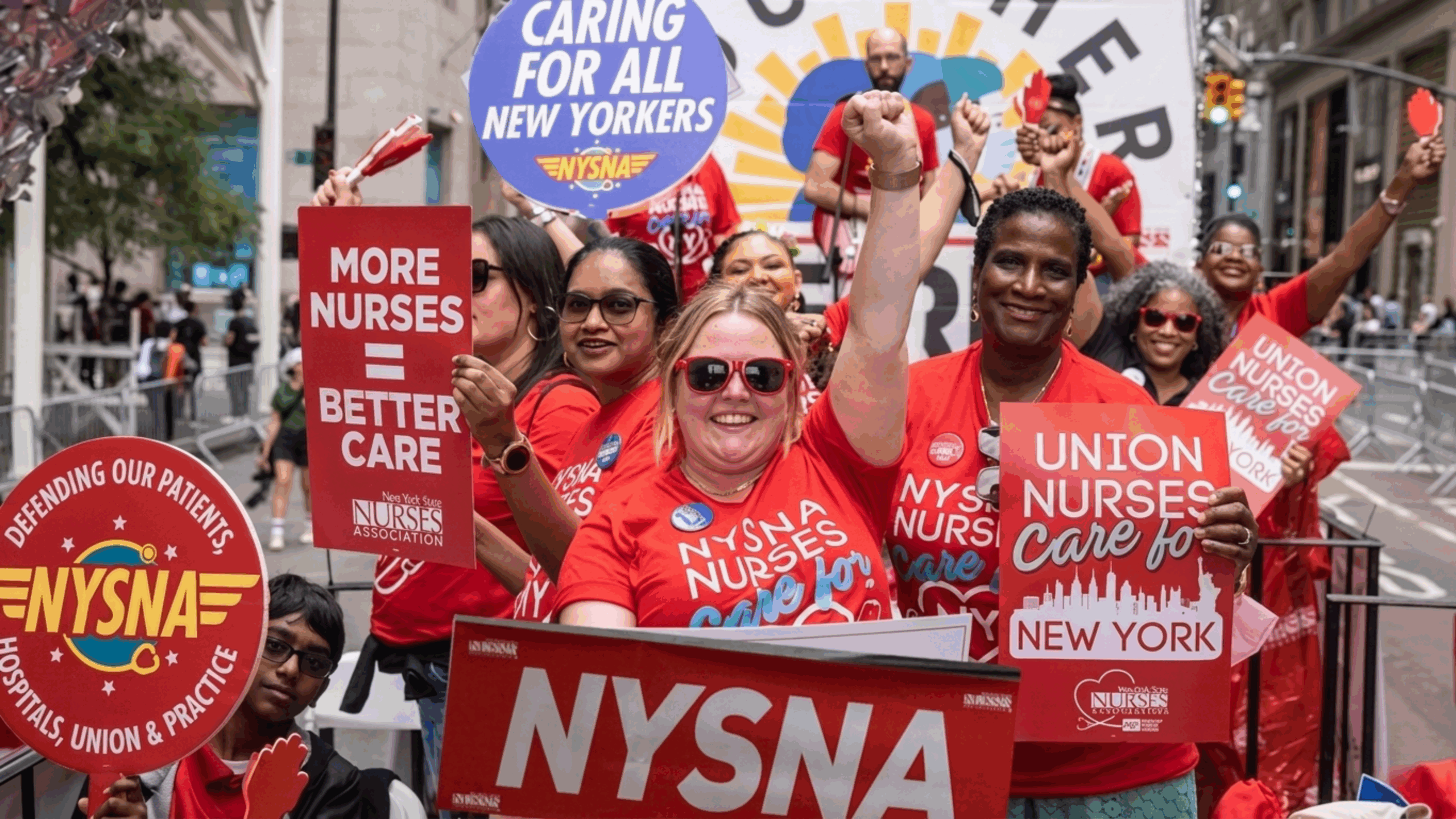
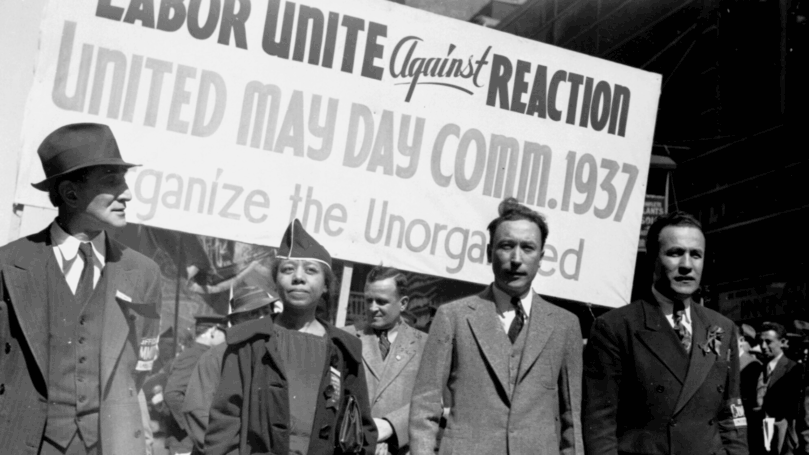
Images: May Day March and Rally by New York State Nurses Association. Public domain; Edith Ransom and Charles Zimmerman (center) of ILGWU Local 22 march with others in the 1937 May Day parade. International Ladies Garment Workers Union Photographs (1885-1985). Kheel Center/Flickr; We fight for workers by AFL-CIO; May Day! Celebrating the Power of Solidarity. NEA.

 Join Now