

The growing discussion around the potential for a general strike in the United States is a sign of the times. It reflects our working class exploring the extent of its power in the face of capitalism’s deepening systemic crisis and the fascist danger emanating from the Trump regime.
For communists, this is a pressing strategic question. What is our Marxist-Leninist view of the role such a tactic should play in the struggle to block fascism and build toward socialism? The answer lies not in romantic declarations, but in the concrete work of building a united, labor-led movement capable of decisive political action — a movement that is prepared to act when the inevitable crises of capitalism, and in this moment the danger of fascism, create the conditions for mass struggle.
What is a general strike?
A general strike is defined by its scope, political character, and coordination. It is not a large protest or a series of walkouts. It is a conscious, coordinated work stoppage by a decisive section of the working class across the economy, whether local or national in scope — in transport, logistics, energy, manufacturing, communications, the public sector, and service industries. As a strike across the diverse sections of the economy, it requires broad outreach through allied organizations and forces outside of the traditional trade union movement.
The goal is to win a major political concession from the capitalist class. This can range from attempts to stop an imperialist war, guarantee housing, defend democratic rights, or halt state repression. It is an inherently social and political act that challenges the balance of class power in society.
This distinguishes it fundamentally from a big protest, however important those are. The focus shifts from appealing to the authorities to compelling them through organized, collective action by withholding our labor power. At the same time, the organization of a general strike must be seen within the context of a variety of tactics that could be employed depending on circumstances.
As Karl Marx noted, strikes build solidarity and help workers realize their power, transitioning from economic to political struggle. The class struggle is the motor force of history, erupting from the real, material conditions of working people.
However, we reject syndicalist or anarchist notions that a spontaneous general strike can, by itself, “overthrow the state.” Sustainable political change requires organized, strategic, politically-driven mass, popular action. We cannot fall prey to careless calls for general strikes from those without a direct impact by the sacrifice that striking requires.
We cannot be swept away by romantic notions of what a general strike is and what a general strike can accomplish divorced from the patient work that makes them possible and the specific crises that trigger them.
History offers crucial lessons. The French general strike of May 1968 involved 11 million workers and paralyzed the country. Yet, it ultimately saw a dramatic rebound for the status quo. A key reason was the rift between the ultra-left student movement, which championed abstract revolutionary slogans, and the trade unions focused on material demands. The students neglected the patient work of coalition-building and plain-language analysis that raises class consciousness, sacrificing long-term gains for “a few weeks of carnivalesque joy.” At the same time, the workers’ material victories were divorced from a broader political vision for change. This left the capitalist state intact and led to a historic electoral defeat for the Left.
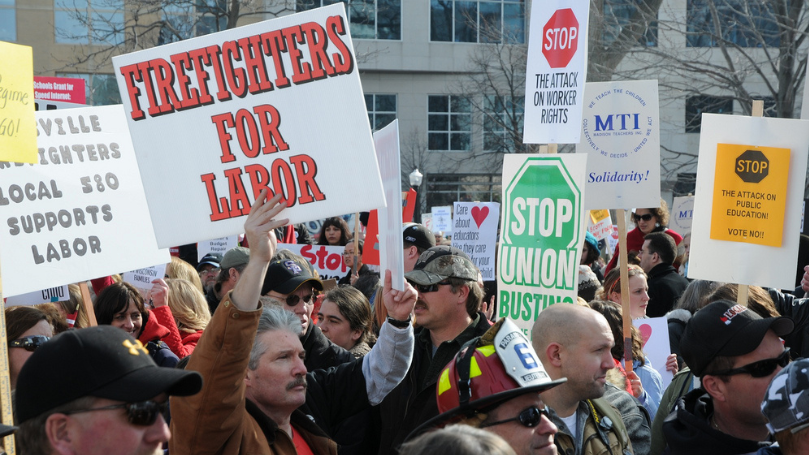
Conversely, the 2011 uprising in Wisconsin against the introduction of “Right to Work” laws saw a massive mobilization against these anti-union attacks, but momentum was lost when moderates re-asserted an unwarranted faith in the political process and a desire for “calm,” rather than continuing to build and apply popular and economic pressure to force concessions from the state.
These brief examples underscore a vital point: a successful general strike must be rooted in more than momentary anger but in the actual activity and main demands of the working class at a specific moment in time. Its success also requires a shared positive vision to sustain momentum. The inciting motive cannot be solely negative (to stop an outrage) but must also articulate positively what we are for and want to achieve to carry forward.
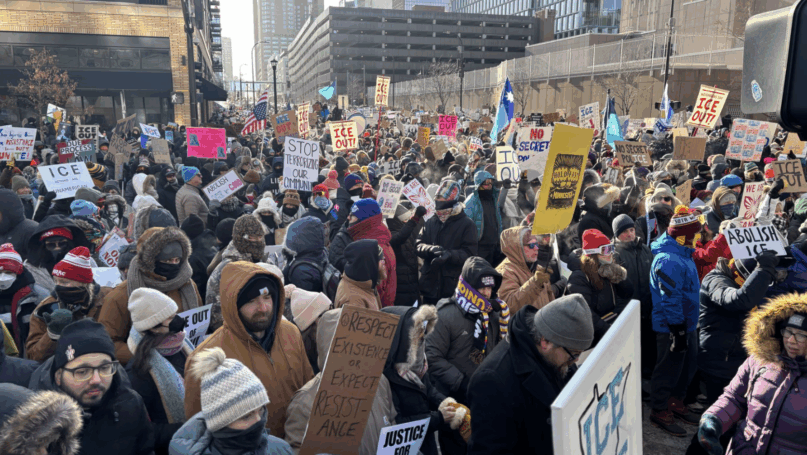
The recent Minneapolis uprising, for example, arose not from an abstract call for a “general strike,” but from a specific demand that Immigration and Customs Enforcement (ICE) get out of their state and stop terrorizing immigrants and all working people. There existed a history of deep coalition building (known as the Minnesota Model) which built up the necessary infrastructure to make such an action possible, even if its original intent was not geared towards a general strike or statewide shutdown.
Coalition building is essential
A general strike cannot be convened on social media or simply by decreeing a date years in advance. It requires an infrastructure of trust and organization ready to be activated when an inciting moment or spontaneous outrage occurs. This is the slow, patient work of coalition building.
As previously stated, the successful statewide shutdown in Minnesota on January 23 provides a key model. It was the product of years of deliberate strategy by organizers to unite labor unions with community organizations, faith groups, immigrant rights coalitions, and small businesses around a shared vision for their community that created the conditions necessary for the action to be realized.
An important approach to coalition building is the tactic of “Bargaining for the Common Good.” This model transforms union contract fights into platforms for advancing the needs of the entire working class, as seen with the Chicago Teachers Union fighting for green schools and affordable housing, or the United Teachers of Los Angeles fighting for better support and safety and smaller classroom sizes, or SEIU healthcare workers linking their struggles to community well-being.
These campaigns proactively built the coalition by creating networks of mutual obligation and shared interest. They positioned the working class as the leading force for the common good and addressed the alienation of the middle strata by showing that the fight against big business interests is also a fight for better schools, clean air, and stable neighborhoods.
Bargaining for the Common Good can be seen as an embryonic form of the anti-monopoly coalition. Such a coalition involves uniting the labor movement, community organizations, civil rights and faith groups, and even small businesses, together to fight against the common enemy of monopoly capital that squeezes all of them.
Furthermore, groups like May Day Strong are currently holding mass calls on what general strikes are, for instance, and how to make them successful in response to the threats coming from MAGA fascism. This development reflects a working class exploring the tactic of a general strike to respond to the immediate fascist threat and the economic pain felt by a billionaire-controlled political and economic system.
However, it is critical to note that not every strike or mass action begins with this form of consciousness. The immediate struggles—against MAGA fascism, against an anti-union law or union busting, for immigrant rights—is often the spark.
But the discussions happening now point towards the development of such an anti-monopoly coalition. Monopoly capitalism is the driving force crushing the living standards of working people, the drive to reinstate racist practices, imperialist wars, and the fascistic Trump regime. As people engage in different struggles—first against MAGA, then perhaps against a specific corporation like Target—they can, through experience and political education, recognize that their true common enemy is monopoly capital. This is the strategic transition we must work to facilitate.
The role of the Communist Party
This is where our role as Communists is essential. We must patiently highlight the connections between the struggles of the moment, light the path forward, and build unity in the process. In this way general strikes can become a key tactic, among many, in winning people to socialism as the only final solution to the crisis of monopoly capitalism.
It is our responsibility as workers to push for the immediate needs and demands of our working class, as well as a socialist vision as a solution to the crises we face. We do this by being a consistent force within the labor movement and people’s organizations, by winning them to concepts of anti-fascism, the fight against racism, nationalism, sexism, and bigotry, in addition to the anti-monopoly coalition, labor-community unity, and socialism.
The CPUSA works to unify the struggles of the working class and all oppressed peoples, giving them direction, and helping to raise the level of political understanding. This means meeting workers where they are and helping them see the larger system that produces the fascist threat and the source of the crisis of everyday living.
Our tasks include helping develop the structures that can sustain a broad front and advocating for durable working-class organizations in workplaces and neighborhoods. It means we must fight for deeper political education within trade unions on the history of struggles so that workers can learn from both victories and shortcomings.
We must also play our role to help stimulate organizing campaigns and constantly push to organize the unorganized workers. We must continue to explore and utilize every form of collective action available to our diverse working class.
We cannot shortcut the step-by-step process of bringing these coalitions into being. As was the case in Minnesota, unity takes time to build but can be mobilized quickly and effectively when needed. When a crisis hits — and these crises will be ongoing — the existence of this unity allows for a powerful, coordinated response. Mistakes or shortcuts to this process can lead to further repression and a loss of confidence in mass, collective action.
What comes after?
What happens the day after a general strike? The outcome hinges on whether the action was a one-time affair or a strategic advance in building working-class power. If such a strike is embedded within a growing coalition with a positive vision for social change, it can consolidate gains, deepen organization, and heighten the political consciousness of millions. It becomes a school of revolution, clarifying who holds power and what it will take to win it.
Building these coalitions includes utilizing all tools in the toolbox, including the tactic of the general strike. The important point is not the strike call itself, but the strategic orientation of developing the durable, organized, labor-led coalition that makes such an action realistic and gives it the direction necessary to fight forward.
The ultimate power we have is our ability to compel change through both political and economic means. This requires the patient, daily work of building unity against the common enemy of monopoly capital and lighting the path toward a socialist future.
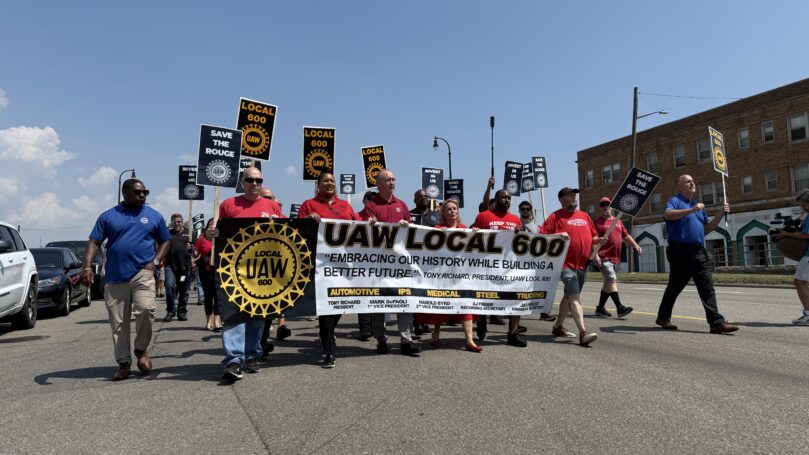
Images: Firefighters for Labor protest in Wisconsin, 2011. Creative Commons; UAW Local 600 members march in Detroit. People’s World; Demonstrators against ICE in Minneapolis on Jan 23. UE on X.

 Join Now