

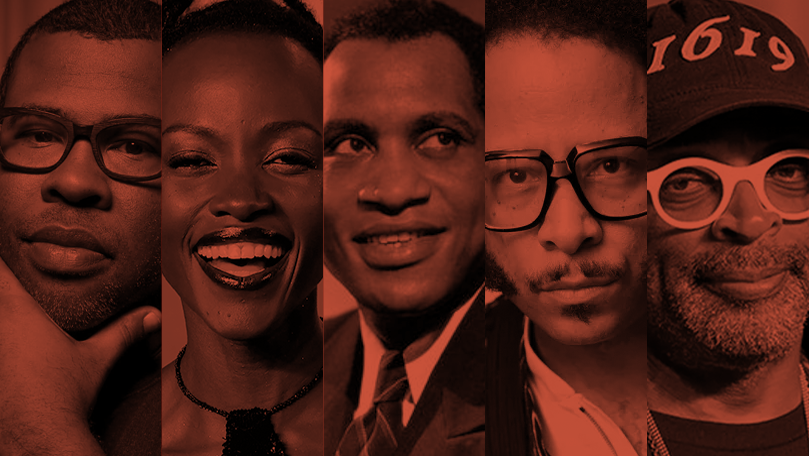
The history of African American performance, theater, and film is deep and rich. Since the days of chattel slavery, African Americans have used performance and storytelling as a means of escape, empowerment, and as a way to fight for equality. Due to space limitations, I won’t be able to get into every performer, play, film, director, or crew member, but I hope to paint a broad picture of how theater and film have been for African Americans not just an art form but a tool of resistance.
When we talk about culture and resistance in African American history, theater and later film became two very powerful and popular means of resisting white supremacist hegemony when it came to questions of whose story is worth being told, who should be represented, how they should be represented, and who gets to tell that story.
Most people are aware of at least some of the history of blackface. While Black performers were few and far between — and for some time outright banned from the professional entertainment industry — white performers wore blackface as a means of entertainment for white audiences and as a way to justify slavery and Jim Crow. For many of the first Black performers who were allowed to work in the entertainment industry, their only options were to wear blackface themselves and to portray stereotypical characters.
Meanwhile, William Henry Brown, a West Indian living in New York City, founded the first Black theater in lower Manhattan in 1821 — six years before slavery was abolished in New York — and helped form the first recognized African American theater troupe, “The African Company.” Brown’s productions began in an old apartment building, until he purchased a 300-seat theater which later became known as The African Grove Theater. It put on the first Black stage play, “The Drama of King Shotaway,” of which we unfortunately have no surviving prints. Along with original plays, The Grove produced numerous Shakespeare plays such as Richard III and Othello. The Grove’s production of Othello was contentious, as they were in competition with a white theater down the block staging the exact same production.
The Grove’s Othello was the first time a Black man played the title role professionally — even though Othello’s non-white race is essential to the story. The Grove drew mixed audiences: Black, white, and some attendees who were even enslaved. Its popularity created tensions with white theater companies and white neighbors. It was mysteriously burned to the ground without explanation after only a few years. Its existence — entirely during the era of slavery — is a true testament to the boldness and courage that have defined the Black Revolutionary Tradition and the fight for African American equality.
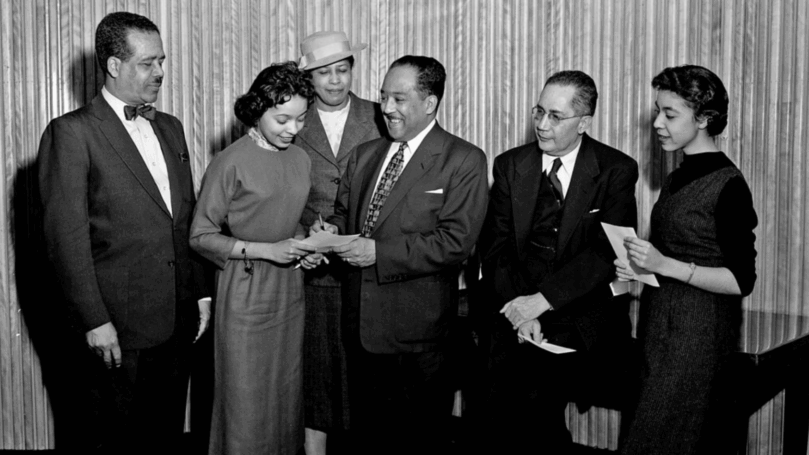
In the early part of the 20th century, during the cultural boom of the Harlem Renaissance, theater became one of the most popular art forms. Two of the most prominent theaters, the Lincoln and the Lafayette, hosted some of the era’s most celebrated entertainers, actors, directors, and playwrights. During the Depression, as part of Roosevelt’s New Deal, the Federal Theater Project was created to support artists and provided thousands of jobs to the unemployed. The Federal Theater Project also had a special mission for Black artists, and several Black productions received federal funding — among them Haiti by William DuBois, not to be confused with W.E.B. Du Bois.
Fun fact: The Haitian Revolution inspired more plays by Black playwrights than any other event in Black history — for instance, Toussaint L’Ouverture by C.L.R. James and Langston Hughes’ Emperor of Haiti.
The situation regarding federal funding for the arts today is starkly different, with cuts across the board and slashes to already underfunded programs. Black theater companies like the Classical Theater of Harlem have had tens of thousands of dollars in funding cut under the Trump administration.
Returning to the Harlem Renaissance: beyond the big mainstream productions being enjoyed by wide audiences, a great deal of underground and revolutionary work was happening as well. Although he did not write the play Haiti, W.E.B. Du Bois contributed to the theater by creating the KRIGWA Players alongside librarian Regina Anderson. The KRIGWA Players’ focus was, in their own words, “to establish a theater…which shall primarily be a center where Negro actors before Negro audiences can interpret life as depicted by Negro artists.”
While welcoming to people of all races, what the theater sought to establish — alongside many other artistic movements of the Harlem Renaissance — was that African Americans should be able to tell their own stories and represent themselves. This idea of representation extended beyond art and performance into political representation and major professions like medicine and law: the belief that African Americans should be equally represented at every level.
Another remarkable group was the Harlem Suitcase Theater, created by Langston Hughes and Communist Party member Louise T. Patterson, which produced revolutionary, class-conscious works like Don’t You Want to Be Free? The idea behind the Harlem Suitcase Theater was that it could be performed anywhere and everywhere, with everything needed for a production able to be packed into a suitcase. Hughes and Patterson aimed to bring working-class stories and socially conscious work to African Americans throughout the Depression.
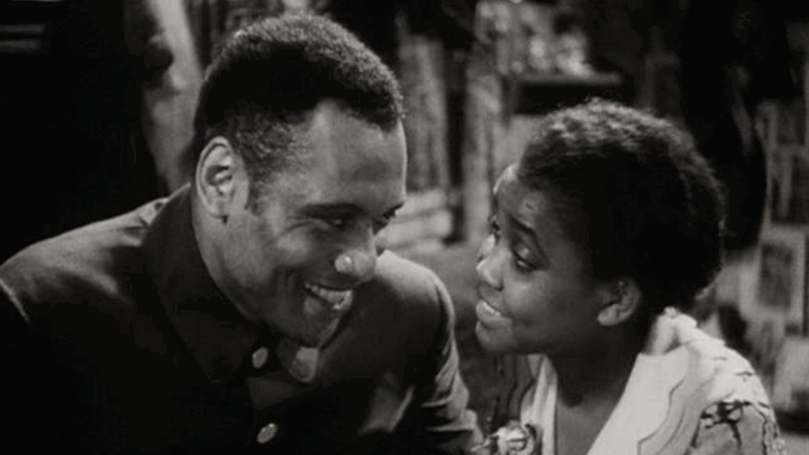
On the subject of early African American film, two figures must be discussed: William Foster, the first recognized African American director, and Oscar Micheaux, the first major Black film director. Foster was a talented producer and director who made the first all-Black film, The Railroad Porter, in 1913. Micheaux is widely recognized as the leading African American force in film during the 1920s and ’30s and produced many films that are still studied and revered today. He worked primarily in what were known as “race films,” which placed racism at the center of the narrative. For example, Body and Soul, directed by Micheaux, famously starred Paul Robeson in his first major role.
As the first decades of the 20th century progressed, Black actors were increasingly permitted to work professionally within the entertainment industry — but not every film was as progressive and political as those of Micheaux. The most popular films depicted Black people as seen through white eyes. While less egregious than blackface, Black roles and characters were still stereotypes and caricatures, not yet fully humanized. Common tropes included the mammy, the jezebel, the uncle tom, the tragic mulatto, and the sapphire. These supporting roles served to keep Black people in second-class positions within the American imagination.
The film industry discriminated against Black performers and storytellers not only on screen but at every level. In 1949, the Moving Picture Operators Union, Local 249, in Dallas, Texas, picketed outside a theater that served Black audiences exclusively but had hired a single white projectionist. The picketers’ primary goal was to compel the theater to employ Black projectionists, but the owner refused on the grounds that the Black projectionists were unionized and he would “have to raise ticket prices.”
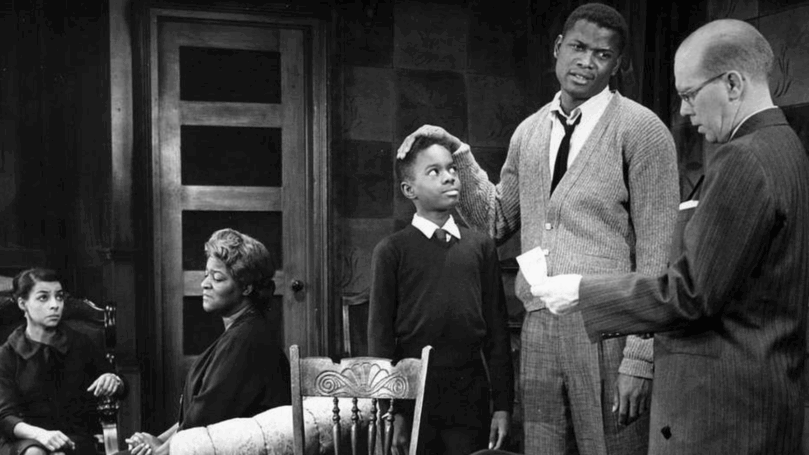
Moving into the mid-20th century, one work stands out above others: A Raisin in the Sun, a play — and later a film — written by Communist Lorraine Hansberry. This landmark play was the first written by a Black woman to be produced on Broadway, and it featured the first Black director on Broadway, Lloyd Richards. A Raisin in the Sun was a transformative moment for Black storytellers; it is widely recognized as the first realistic depiction of everyday working-class Black American life on a major stage. The play follows a family as they decide what to do with a large sum of money they have inherited, and whether to move into an all-white neighborhood. It is based on Hansberry’s own experience growing up on the South Side of Chicago, where her father moved the family into a white neighborhood and waged a three-year court battle against racially segregated housing, fighting all the way to the Supreme Court — and winning. Here we see not just how art inspires action, but how action inspires art.
A Raisin in the Sun and works like it opened doors for many Black professionals in film and theater. It demonstrated that honest and complex stories about Black people could resonate not only with Black audiences, but with white and mainstream audiences as well.
The 1950s saw the rise of many more Black productions on stage and screen. Black stars were beginning to play leading roles; they had opportunities to be glamorous, funny, or commanding. These opportunities were not widely available to most Black actors, but meaningful headway was being made.
While some of these films had all-Black casts, they were less overtly political than the race films of the 1930s — mainstream commercial films not particularly aimed at raising political consciousness. Take, for instance, one of the most critically acclaimed films of the decade: Carmen Jones, starring Dorothy Dandridge, Pearl Bailey, and Harry Belafonte. An all-Black adaptation of Hammerstein’s Carmen opera, Carmen Jones solidified the careers of all three stars. It is worth noting that Black performers playing roles traditionally held by white actors have historically done well commercially — as evidenced, more recently, by the uproar from some right-wing audiences over the live-action The Little Mermaid with Halle Bailey and the musical Wicked with Cynthia Erivo, even as audiences turned out in droves and embraced both films.
Moving into the 1960s, with the civil rights movement in full swing, film and theater had grown to a point where they could go beyond surface-level representation. Playwrights like Amiri Baraka (formerly LeRoi Jones), James Baldwin, and Lonne Elder III brought politically charged issues directly before audiences. Baraka’s play The Dutchman depicts a tense and ultimately deadly subway encounter between a Black man and a white woman. The Dutchman was part of the Black Arts Movement, which asserted that Black people should have their own cultural expression free from white standards and expectations. Where some artists sought to prove their humanity by excelling in classical roles in Shakespeare, others believed Black people needed their own forms entirely and had no interest in creating work palatable to white audiences.
Even outside the specific politics of the Black Arts Movement, politically charged work by Black artists flourished throughout the 1960s. In James Baldwin’s Blues for Mister Charlie, he tells an unflinching story of a lynching in the South — inspired by the murder of Emmett Till and dedicated to Medgar Evers and his family. The play calls on white audiences to denounce racial bigotry and choose a side.
The fight for equality in culture extended beyond the screen and stage — it was waged in the audience as well. The struggle for desegregation of public spaces included theaters: Black audiences were either pushed to the back of the house or the balcony, or forced to attend all-Black screenings held at late-night or otherwise inconvenient hours.
Entering the 1970s, any history of this period would be incomplete without mentioning the commercially successful Blaxploitation genre, which has been both loved and criticized by Black audiences since its inception. While praised for showcasing Black leading characters who were empowered, fearless, bold, and courageous, these films were also criticized for their depictions of pimps, prostitutes, gangsters, drug dealers, and criminals.
Some in the Black community felt these films offered an honest look at the battles faced by those living in impoverished urban neighborhoods; others felt the films simply reinforced stereotypes. A question worth asking: are white communities worried about stereotyping after watching a film like American Psycho? In other words, is the problem with representing imperfect Black characters, or is the problem a racist system that stereotypes Black people regardless?
The 1980s cannot be discussed without August Wilson, one of the most revered American playwrights, who contributed an “American Century” cycle of ten plays — one for each decade of the 20th century — depicting Black American life. Among his most celebrated works are Fences and Ma Rainey’s Black Bottom, both of which have been adapted into major motion pictures in the past decade. Lloyd Richards, whom we remember as the first Black director on Broadway, also worked closely with Wilson throughout his life, directing most of his plays. Wilson is recognized as one of the great American dramatists, alongside Tennessee Williams, Eugene O’Neill, and Arthur Miller.
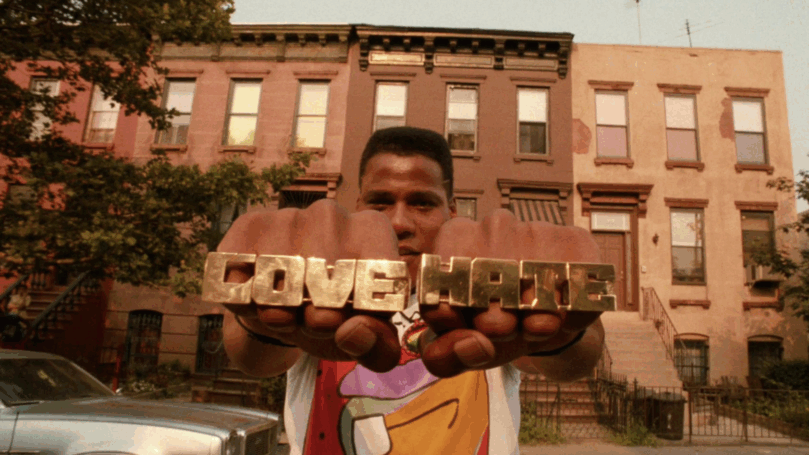
As for late-20th-century film: as time progressed, Black roles and stories became increasingly complex. Black actors and entertainers competed across every genre, and Black filmmakers developed their own distinctive aesthetics and styles — from independent film to mainstream blockbusters, from comedies and musicals to gangster movies and romances. Despite their box office success, accolades from elite institutions remained scarce. Spike Lee’s Do the Right Thing is still considered one of the greatest Oscar snubs in history, given the film’s immediate impact and its enduring significance. Its distinctive visual style — saturated colors, a powerful soundtrack, and a political message about police brutality woven through an engrossing narrative — make it one of America’s most beloved films.
In the present moment, many Black theaters are struggling to maintain funding, yet art has always prevailed in hard times, and scarcity can itself become a source of creativity. Black theaters like the National Black Theater and the Black Spectrum Theater continue to develop new and experimental work, and Black theater artists continue to make significant strides in the field — even as the White House continues to slash arts funding that serves underdeveloped communities. Taking cues from the Heritage Foundation, which considers the NEA (National Endowment for the Arts) a promoter of “politically correct art,” the Trump administration has effectively told artists they may receive grants only if their work celebrates the 250th anniversary of America.
Modern Black film has made tremendous strides. Barry Jenkins’ 2016 film Moonlight stands as one of the most treasured and respected films of the 21st century, praised for its complex, stereotype-free depiction of Black queer identity. It is a moving film that upended expectations for what Black film could look like. Jordan Peele has produced major horror films — Get Out and Us among them — that have cemented his status as one of the most respected Black directors of the past decade. And filmmaker Ava DuVernay has made some of the most important films of recent years, including the documentary 13th, which examines the prison-industrial complex, and Selma, a historical drama following Martin Luther King Jr. as he fights for equal voting rights and leads the historic Selma-to-Montgomery marches.
The power of storytelling can be transformational. One Stanford study found that after watching a single film about the injustices and inequalities Black people face in prison, participants were more likely to feel empathy and even to take political action. We are often told that culture doesn’t matter as much — that it’s just a distraction (and sometimes it is) — but the best question to ask in times like these is: “If it didn’t matter so much, why are they trying to get rid of it?”
While African Americans are still fighting for full representation and equality in culture, some people claim Black people have become overrepresented in television and film — that they are taking white roles and do not deserve even the small share of accolades they receive. We must protect our right to tell our own stories and to represent ourselves. At a time when so much division and confusion about minority groups is being deliberately sown, storytelling, public theaters, and filmmaking allow us to create our own narratives and combat racism on the cultural front.
The opinions of the author do not necessarily reflect the positions of the CPUSA.
Images: African American artist collage. Fred Barr. CPUSA; Langston Hughes. Flickr/Creative Commons; Paul Robeson and Ruby Elzy in The Emperor Jones. Paul Robeson Collection/Creative Commons; A Raisin in the Sun. Walters Art Museum/Creative Commons; Spike Lee’s “Do The Right Thing” 1989. Creative Commons.

 Join Now