

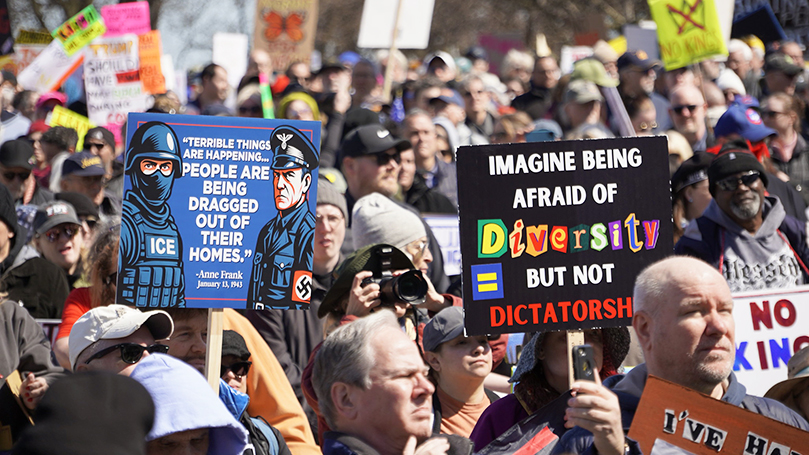
No Kings 3 was by far the largest, broadest, and most important expression of the anti-MAGA upsurge to date. Organizers estimate that some 8 million people turned out at over 3,000 protests across all 50 states. In New York City, it is estimated that some 300,000 demonstrated against Trump and the MAGA agenda. Organizers anticipated such a massive turnout that they directed marchers along two avenues instead of one. They were right: protesters filled both 7th Avenue and Broadway before merging at Times Square and marching to 34th Street, where the demonstration ended.
New York’s protest was militant, joyous, and celebratory. It was filled with song, marching bands, drumming, and, of course, militant chants. Due to labor’s participation, the march showed signs of a breakthrough — already somewhat present in October’s No Kings 2 — in the crowd’s class and racial composition. With the exception of the first protest in Manhattan in March 2025, led by Make the Road and a few labor unions, New York’s anti-Trump marches have been overwhelmingly white. This time, however, the civil rights movement was represented by the NAACP, along with Rev. Al Sharpton of the National Action Network, who joined the press conference on the morning of the march.
Thus, while the third march may not quite have been the charm, it revealed modest progress, laying the basis for greater multiracial and multinational unity. This cooperation was an achievement following the divisions that emerged after the defeat of the Biden–Harris electoral coalition. That loss sparked feelings of betrayal among segments of the Black electorate, alongside shock and despair within the broader democratic base, leading to a general demobilization of anti-MAGA resistance. In the ensuing vacuum, a new social movement — “50501” — emerged to organize the first national anti-MAGA protests. Initially organized on Reddit, the movement’s leadership lacked established ties to communities of color, contributing to limited Black, Brown and Asian participation.
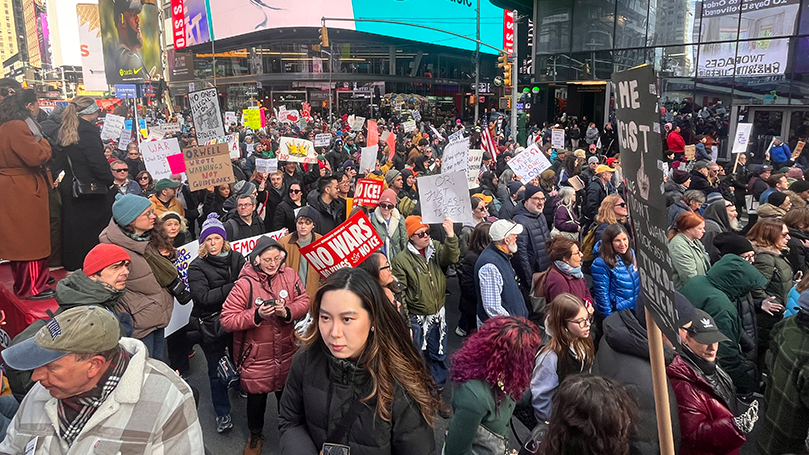
A major feature of No Kings 3, however, was the AFL-CIO’s support. The trade union federation not only endorsed the protest but also organized two national online meetings to increase worker participation. The NAACP also endorsed the march, with local branches organizing turnout. Latino organizations joined as well, including United We Dream and the League of United Latin American Citizens.
The CPUSA organized militant contingents in many protests around the country marching in New York under a banner demanding an end to the war on Iran.
At this stage of the anti-MAGA fightback, labor’s participation is vital. The people’s front must not only be broad but must also reach deeply into the ranks of the working class. In fact, the future success of the anti-fascist coalition depends largely on whether it becomes working-class-led. The working class must place its unifying imprint on the struggle to preserve democracy and overcome the vacillating and half-hearted efforts that have characterized centrist and liberal bourgeois Democratic Party leadership. In this regard, those who attacked No Kings — labeling it a “liberal block party” and urging people to stay away — are making a serious mistake. Weaknesses in program and platform are not corrected from the sidelines but through engagement in the main avenues of struggle.
That is precisely what is beginning to happen. At the Minnesota No Kings protest — the country’s “flagship event” — Indivisible co-chair Ezra Levin, drawing on the success of the Twin Cities January action, called on the anti-MAGA movement to adopt a “No Work, No School, No Shopping” theme for the upcoming May Day marches and protests. The May Day Strong coalition appears to be among the initiators. While local conditions vary greatly, a Minnesota-style economic shutdown could have a major impact, and support for such actions seems to be growing. At this stage, however, major trade union backing remains uncertain. That said, AFL-CIO President Liz Shuler, at a No Kings 3 follow-up meeting, emphasized the importance of Workers Memorial Day and May Day, calling them not only “days of reflection” but also “days of worker demand.” This expression of support for May Day appears to signal a significant shift for AFL-CIO leadership, whose spokespersons in the past encouraged unions to celebrate Law Day on May 1.
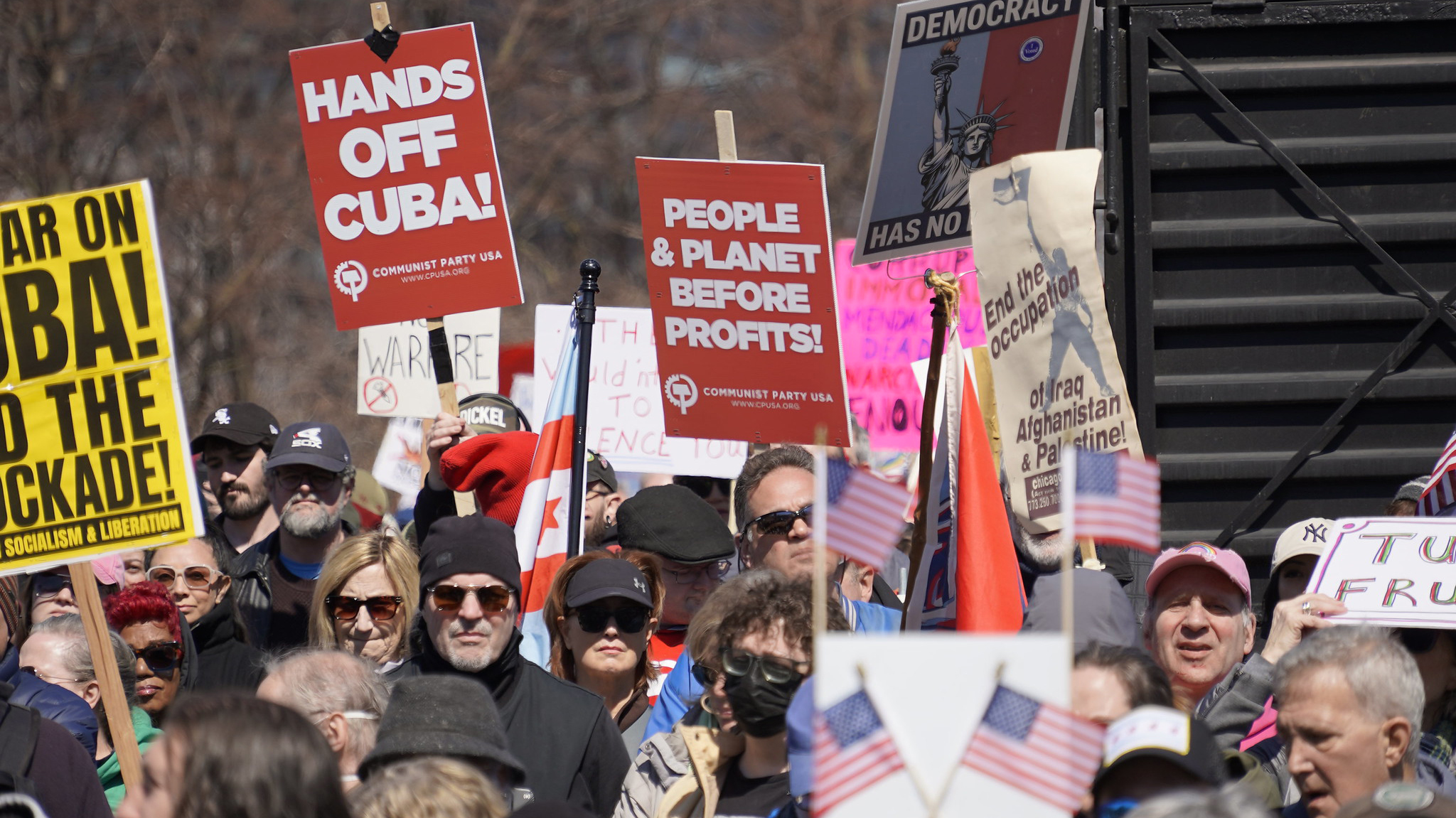
May Day appears poised to be the next major national action. Organizers argue — and rightly so — that, in addition to marching, other tactics are necessary, including demonstrative, nonviolent shows of force. Indeed, all the tools in the toolbox must be employed in the fight against the MAGA right. Whether calls for strikes and boycotts this May Day will be widely heeded remains uncertain. That said, the concept of working-class action capable of halting the flow of goods is now gaining traction and will not be easily dismissed — the success of the national Target boycott is a case in point.
Speaking of the Target actions, despite some confusion that entered the boycott movement when one coalition partner recently withdrew, the campaign continues. Anger at Target’s capitulation to MAGA runs deep in the African American community, and key demands have yet to be fully met. In addition, the corporation continues to allow ICE to use its facilities—a callous act that has significantly broadened public awareness of its ongoing complicity with MAGA policies. In a notable display of solidarity, the American Federation of Teachers has reiterated its support for the boycott.
Thus, May Day appears to promise a new level of working-class unity against the MAGA right. Needless to say, such unity must also include demands to end the blockade against Cuba and the war against Iran. Nor can there be any retreat from the demand to end the genocide in Gaza.
All out for May Day 2026!
Images: No Kings Day March #1 in Chicago, IL March 28, 2026 by CPUSA. Creative Commons. No Kings Day March #2 in Chicago, IL March 28, 2026 by CPUSA. Creative Commons. No Kings Day March #3 in Chicago, IL March 28, 2026 by CPUSA. Creative Commons.
 Join Now